



Product Class: Investigational Thymosin-Related Regenerative Peptide
Active Ingredient: Thymosin Beta-4 / TB-500-labelled peptide
Concentration: 5 mg/vial
Price For: 1 vial
Brand: TB 500
TB-500 5 mg by Axiolabs is supplied as a vial labeled with 5 mg of Thymosin Beta-4/TB-500-related peptide. TB-500 belongs to the investigational thymosin-related peptide category and is primarily discussed in connection with tissue remodeling, cell migration, wound-healing biology, connective-tissue research, and sports-recovery applications.
A clinically important distinction exists between full-length Thymosin Beta-4 (Tβ4) and TB-500. FDA's Global Substance Registration System identifies TB-500 as the N-terminal acetylated 17–23 fragment of thymosin beta-4, with the seven-amino-acid sequence N-acetyl-Leu-Lys-Lys-Thr-Glu-Thr-Gln. Full-length human thymosin beta-4 is a separate peptide substance.
This distinction matters because clinical or preclinical findings involving complete thymosin beta-4 should not automatically be attributed to the shorter TB-500 fragment. Commercial peptide labeling sometimes uses the terms "TB-500" and "Thymosin Beta-4" interchangeably even though FDA recognizes them as different substance identities.
As of 2026, TB-500 is not an FDA-approved treatment for tendon injuries, ligament injuries, muscle tears, wound healing, bodybuilding, or athletic recovery. FDA states that it has not identified human exposure data for drug products containing the TB-500 fragment and lacks sufficient information to determine its human safety.
FDA's July 2026 Pharmacy Compounding Advisory Committee materials also proposed that both TB-500 free base and TB-500 acetate not be included on the Section 503A Bulks List after evaluating proposed wound-healing use.
The 5 mg designation therefore describes the stated content of the Axiolabs vial. It should not be interpreted as an approved injection dose, weekly dose, loading dose, or treatment course.
The thymosin beta-4 system has been investigated because of its relationship with actin regulation, cellular migration, tissue remodeling, angiogenesis, inflammatory signaling, and wound repair. These mechanisms have generated interest across regenerative-medicine research.
Research areas associated with thymosin beta-4 biology include:
However, evidence involving full-length thymosin beta-4 does not establish equivalent therapeutic activity for TB-500. FDA's current safety review specifically states that no human exposure data for TB-500 drug products were identified.
Within bodybuilding, athletic, and peptide-research communities, TB-500 is commonly discussed for proposed applications such as:
These are not approved therapeutic uses. Controlled human trials have not established that injected TB-500 reliably accelerates recovery from tendon, ligament, or skeletal-muscle injuries.
TB-500 is also not a direct anabolic-androgenic agent. It does not act like Testosterone, Oxandrolone, Nandrolone, Trenbolone, or SARMs through primary androgen-receptor activation.
Potential benefits attributed to TB-500 originate largely from biological research on thymosin beta-4 pathways and preclinical regenerative models rather than robust controlled clinical trials of TB-500 itself.
Areas of research interest include:
Such mechanisms make thymosin-related peptides scientifically interesting for injury and regenerative research. They do not, however, prove that commercially supplied TB-500 produces clinically meaningful tendon or ligament healing in humans.
Claims that TB-500 rapidly repairs torn tendons, regenerates damaged ligaments, eliminates injury recovery time, substantially increases flexibility, or directly builds muscle remain insufficiently supported by human evidence.
FDA has additionally highlighted potential safety concerns relating to peptide aggregation, peptide-related impurities, active-ingredient characterization, and immunogenicity.
TB-500 is frequently discussed alongside other regenerative peptides, growth-factor-related compounds, or endocrine agents. These combinations should be understood as experimental rather than established clinical protocols.
The TB-500 plus BPC-157 combination is particularly common in online regenerative-peptide discussions. However, there is no validated controlled human protocol demonstrating that combining these peptides provides superior tendon, ligament, muscle, or wound healing.
Combining several investigational peptides can also increase uncertainty regarding adverse reactions, product purity, sterility, immunogenicity, and causality if an adverse event occurs.
TB-500 has no established role in Testosterone Replacement Therapy or conventional Hormone Replacement Therapy.
TB-500 does not:
TB-500 is therefore pharmacologically distinct from Testosterone Enanthate, Testosterone Cypionate, Sustanon, or other established androgen-replacement agents.
Because TB-500 is not an androgen-receptor agonist, conventional steroid-mediated suppression of the hypothalamic-pituitary-gonadal axis is not expected to be its primary mechanism. However, absence of androgenic suppression should not be interpreted as evidence of overall systemic safety.
Axiolabs TB-500 is labeled as containing 5 mg per vial. This number describes stated vial content only.
There is currently no FDA-approved human TB-500 dosing regimen for:
The 5 mg vial should therefore not automatically be interpreted as:
FDA's 2026 assessment states that human exposure information for TB-500 is lacking, making it impossible to establish a conventional evidence-based therapeutic dosage from current human safety and efficacy data.
Clinical research involving full-length thymosin beta-4 should likewise not be converted directly into dosing instructions for TB-500 because FDA recognizes these as distinct substances.
With any independently manufactured injectable peptide, additional pharmaceutical-quality considerations include:
TB-500 is non-androgenic and does not primarily activate androgen receptors. Therefore, the classical virilizing effects associated with anabolic-androgenic steroids are not expected from its proposed mechanism.
Effects such as:
are not expected as direct pharmacological consequences of thymosin-related signaling.
However, the absence of androgenicity does not demonstrate safety in women. FDA states that important human safety information for TB-500 is lacking. Reproductive, pregnancy, fetal-development, and breastfeeding safety are not established.
The 5 mg vial strength is not a validated female dose.
Anabolic-androgenic steroids produce their characteristic effects primarily through androgen-receptor activation. TB-500 does not share this primary mechanism. Its performance-related interest instead centers on proposed tissue-repair and regenerative effects.
TB-500 5 mg by Axiolabs is supplied as a vial labeled with 5 mg of Thymosin Beta-4/TB-500-related peptide. TB-500 belongs to an investigational class of thymosin-derived compounds associated with actin regulation, cellular migration, tissue remodeling, and wound-healing research.
A central pharmacological consideration is that TB-500 and full-length Thymosin Beta-4 should not be treated as identical molecules. FDA recognizes TB-500 as the acetylated 17–23 fragment of thymosin beta-4, while full-length Tβ4 is registered separately.
TB-500 is not an anabolic steroid, SARM, TRT product, or growth-hormone secretagogue. Claims concerning accelerated tendon, ligament, muscle, or wound healing remain unconfirmed in adequate controlled human trials. The stated 5 mg therefore represents vial content rather than an approved medical or athletic-recovery dose.
TB-500 is a thymosin beta-4-derived peptide. FDA identifies it specifically as the N-terminal acetylated 17–23 fragment of thymosin beta-4 with the sequence LKKTETQ.
Yes. It is a short peptide derived from a region of thymosin beta-4.
Scientific interest relates primarily to thymosin-associated actin regulation, cell migration, tissue remodeling, angiogenesis, inflammation, and wound-repair pathways.
Ligament-repair claims remain experimental and have not been established through adequate human clinical trials.
The combination is frequently discussed in peptide communities, but no standardized controlled human protocol has established that it safely improves tendon, ligament, or muscle healing.
Please log in to write TB 500 review.
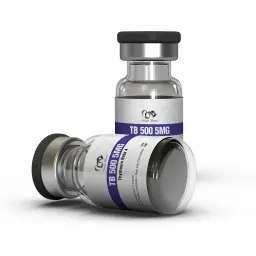
Peptide Hormone
Active Ingredient: Thymosin Beta-4
Concentration: 5 mg / vial
Price For: 2 mL Vial
Brand: Dragon Pharma

Human Peptide Hormone
Active Ingredient: Thymosin Beta 4
Concentration: 10 mg / vial
Price For: 5 mL Vial
Brand: Generic Peptides
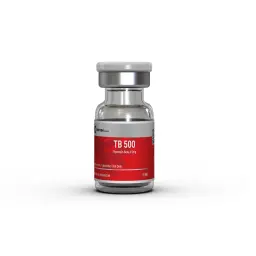
Product Class: Investigational Thymosin-Related Regenerative Peptide
Active Ingredient: TB-500 / Thymosin Beta-4 Related Peptide
Concentration: 5 mg/vial
Price For: 1 vial
Brand: TB-500

Human Peptide Hormone
Active Ingredient: Thymosin Beta 4
Concentration: 2 mg / vial
Price For: 5 mL Vial
Brand: Generic Peptides