



Product Class: Growth Hormone-Releasing Hormone (GHRH) Analogue
Active Ingredient: Tesamorelin
Concentration: 5 mg/vial
Price For: 1 vial
Brand: Tesamorelin
Tesamorelin 5 mg by Axiolabs is supplied as a vial labeled as containing 5 mg of Tesamorelin. Tesamorelin is a synthetic analogue of human growth hormone-releasing hormone (GHRH), also called growth hormone-releasing factor (GHRF). It acts primarily at the pituitary gland to stimulate endogenous growth hormone secretion and consequently increase circulating insulin-like growth factor-1 (IGF-1).
Tesamorelin differs from recombinant human growth hormone because it does not directly replace GH. Instead, it stimulates the patient's own pituitary GH secretion through the physiological GHRH receptor pathway.
Tesamorelin is an established active pharmaceutical substance. FDA-approved Tesamorelin products include Egrifta SV and the newer Egrifta WR, which are indicated for reduction of excess abdominal fat in adults with HIV-associated lipodystrophy. Egrifta WR was licensed in the United States in March 2025 and is supplied as an 11.6 mg multidose vial, while Egrifta SV remains available as a 2 mg single-dose vial.
Importantly, FDA labeling states that Tesamorelin is not indicated for general weight-loss management and is considered weight-neutral in its approved HIV-lipodystrophy application.
Approval of specific Egrifta formulations does not establish regulatory approval or therapeutic interchangeability for an independently supplied Axiolabs 5 mg vial. The 5 mg designation should therefore be understood as stated vial content rather than an FDA-approved single dose or treatment schedule.
Tesamorelin is an analogue of endogenous GHRH. It binds to GHRH receptors on pituitary somatotroph cells, stimulating synthesis and pulsatile secretion of endogenous growth hormone.
The resulting increase in GH signaling subsequently raises production of IGF-1, primarily from the liver and other tissues.
This GH/IGF-1 pathway can influence:
Tesamorelin acts upstream of growth hormone. This distinguishes it from recombinant somatropin, which directly supplies exogenous GH.
Because pituitary function remains part of the mechanism, Tesamorelin depends on an intact hypothalamic-pituitary axis. Approved labeling consequently contraindicates its use in patients with disruption of this axis.
The best-supported benefit of Tesamorelin is selective reduction of excess visceral abdominal fat in adults with HIV-associated lipodystrophy.
Potential clinically observed effects include:
In adults with abdominal obesity and reduced GH secretion outside the HIV population, a randomized study also found reductions in visceral adipose tissue and improvements in triglycerides and selected cardiovascular-risk markers during Tesamorelin treatment. However, this remains research evidence rather than an approved obesity indication.
Potential benefits must be balanced against endocrine and metabolic risks. Approved labeling identifies elevated IGF-1, fluid retention, glucose intolerance or diabetes, hypersensitivity reactions, injection-site reactions, and potential neoplasm-related concerns as clinically important issues.
Tesamorelin acts through the GH/IGF-1 axis and is sometimes discussed alongside other compounds that affect growth-hormone signaling or body composition. These combinations are not validated performance protocols.
Combining Tesamorelin with another GHRH analogue, GH secretagogue, or exogenous growth hormone could increase overall GH/IGF-1 exposure and potentially increase risks such as edema, arthralgia, carpal-tunnel symptoms, glucose intolerance, and persistently elevated IGF-1.
There is no established clinical "peptide stack" showing that combining Tesamorelin with CJC-1295, Ipamorelin, MK-677, or growth hormone improves athletic performance or body composition more safely than medically supervised monotherapy.
Tesamorelin is not Testosterone Replacement Therapy.
It does not:
Tesamorelin instead stimulates the pituitary GH/IGF-1 axis. It therefore belongs to a different endocrine pathway from testosterone replacement.
It should also not be described as conventional growth-hormone replacement. In true GH deficiency, treatment strategies depend on the underlying disorder, and Tesamorelin's approved use is not generalized GH replacement.
Axiolabs Tesamorelin is labeled as containing 5 mg per vial. This represents stated vial content only.
Approved Tesamorelin formulations demonstrate why vial strength cannot be converted directly into dosing instructions. Current Egrifta WR contains 11.6 mg per multidose vial and has an approved dosage of 1.28 mg subcutaneously once daily. By contrast, Egrifta SV contains 2 mg per single-dose vial and has an approved dosage of 1.4 mg once daily. FDA specifically states that these formulations are not substitutable because their strengths, preparation, storage, and dosing instructions differ.
Therefore, the 5 mg content of an Axiolabs vial should not be assumed to equal a single dose or to be interchangeable with either approved Egrifta formulation.
No FDA-approved Tesamorelin regimen exists for:
For independently supplied injectable peptide products, clinically relevant quality considerations include molecular identity, peptide purity, sterility, endotoxin levels, concentration accuracy, stability after reconstitution, and appropriate storage.
Tesamorelin is not androgenic and is therefore not expected to produce the virilizing effects associated with anabolic-androgenic steroids.
Classical androgenic effects such as voice deepening, clitoral enlargement, facial-hair growth, or androgenic scalp-hair loss are not expected from its GHRH mechanism.
However, women remain susceptible to the endocrine and metabolic effects of elevated GH and IGF-1, including:
Pregnancy is contraindicated under approved Tesamorelin labeling. Visceral adipose tissue normally increases during pregnancy and modifying this physiological process offers no known benefit while potentially creating fetal risk.
The 5 mg vial strength should not be interpreted as a validated female dose.
Tesamorelin 5 mg by Axiolabs is supplied as a vial labeled with 5 mg of Tesamorelin. Tesamorelin is a GHRH analogue that stimulates endogenous growth-hormone release and increases downstream IGF-1 signaling.
The active substance has an established clinical role in FDA-approved Egrifta formulations for reduction of excess visceral abdominal fat in adults with HIV-associated lipodystrophy. Current FDA records list Egrifta SV 2 mg and Egrifta WR 11.6 mg as licensed formulations, with Egrifta WR becoming licensed in March 2025.
However, Tesamorelin is not approved as a general weight-loss, bodybuilding, anti-aging, or athletic-performance drug. The regulatory approval and dosing of Egrifta cannot automatically be transferred to an independently manufactured 5 mg vial. The stated 5 mg concentration therefore represents vial content rather than an individualized or regulator-approved dosing recommendation.
Tesamorelin is a synthetic GHRH analogue that stimulates pituitary secretion of endogenous growth hormone and increases circulating IGF-1.
Yes, Tesamorelin is FDA approved in specific Egrifta formulations for reduction of excess abdominal fat in adults with HIV-associated lipodystrophy. This approval does not automatically apply to independently manufactured Tesamorelin vials.
Yes. Tesamorelin is a synthetic peptide analogue of human growth hormone-releasing hormone.
Yes. It stimulates pituitary GHRH receptors and increases endogenous pulsatile GH secretion.
No. Growth hormone directly supplies GH, whereas Tesamorelin stimulates the pituitary gland to release endogenous GH.
Please log in to write Tesamorelin 5 mg review.
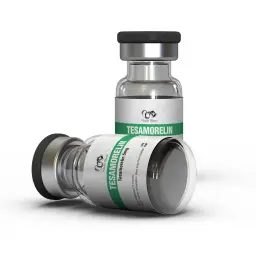
Human Peptide Hormone
Active Ingredient: Tesamorelin
Concentration: 5 mg / vial
Price For: 2 mL Vial
Brand: Dragon Pharma
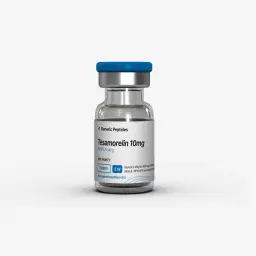
Human Peptide Hormone
Active Ingredient: Tesamorelin
Concentration: 10 mg / vial
Price For: 5 mL Vial
Brand: Generic Peptides
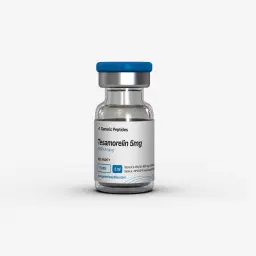
Human Peptide Hormone
Active Ingredient: Tesamorelin
Concentration: 5 mg / vial
Price For: 5 mL Vial
Brand: Generic Peptides
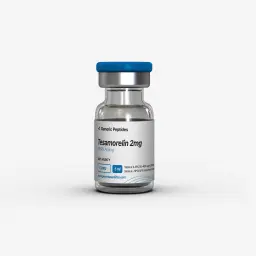
Human Peptide Hormone
Active Ingredient: Tesamorelin
Concentration: 2 mg / vial
Price For: 5 mL Vial
Brand: Generic Peptides