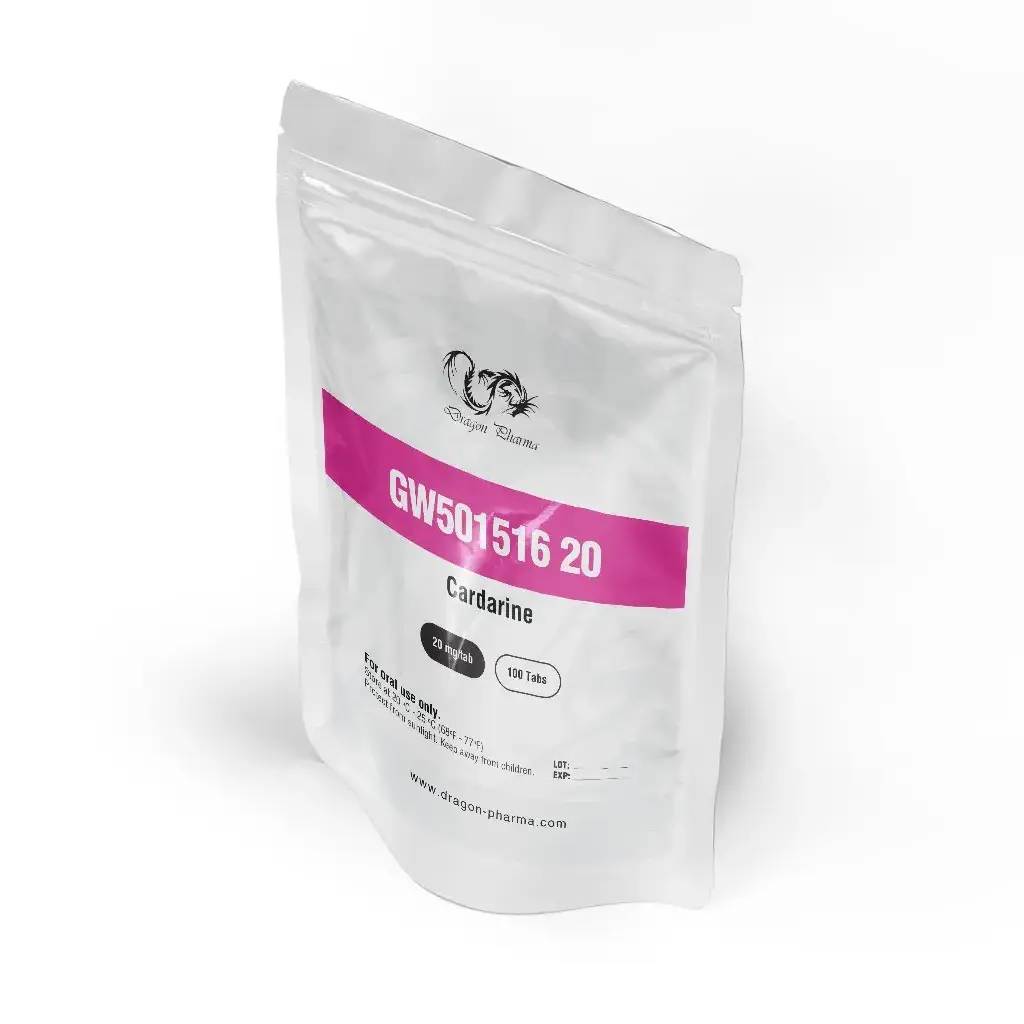
Original GW501516 by Dragon Pharma
Product Overview
GW 501516, commonly known as Cardarine, is an investigational PPARδ (Peroxisome Proliferator-Activated Receptor Delta) agonist manufactured by Dragon Pharma. Each tablet contains 20 mg of Cardarine. Although frequently grouped with SARMs in bodybuilding discussions, Cardarine is not a selective androgen receptor modulator or anabolic steroid. Instead, it acts by activating PPARδ receptors involved in energy metabolism and fatty acid utilization.
Cardarine has been investigated for its potential effects on lipid metabolism, endurance performance, glucose utilization, and metabolic health. It remains an experimental compound and has not received approval for routine therapeutic use.
Product Class
- PPARδ (PPAR-Delta) Receptor Agonist
- Research Compound
- Non-Hormonal Performance Enhancer
- Metabolic Modulator
Active Ingredient
- Cardarine (GW 501516)
- Concentration: 20 mg per tablet
- Pack Size: 100 tablets
Indications
Clinical Research
Cardarine has been investigated for its possible role in:
- Lipid metabolism
- Insulin sensitivity research
- Metabolic syndrome
- Energy metabolism
- Fatty acid oxidation
Performance Context
Within bodybuilding and endurance sports, Cardarine is commonly associated with:
- Improved endurance capacity
- Body recomposition
- Fat-loss programs
- Cutting phases
- Cardiovascular conditioning
Mechanism of Action
GW 501516 selectively activates PPARδ receptors located throughout skeletal muscle and metabolic tissues. Activation of these receptors influences:
- Fatty acid transport
- Fat oxidation
- Glucose utilization
- Mitochondrial energy production
- Exercise metabolism
Unlike anabolic steroids, Cardarine does not bind to androgen receptors and does not stimulate testosterone production or muscle protein synthesis directly.
Pharmacokinetics
- Administration: Oral tablets
- Active Ingredient: Cardarine (GW 501516)
- Half-life: Approximately 16–24 hours
- Classification: Non-hormonal metabolic modulator
The relatively long half-life supports sustained receptor activation throughout the day following administration.
Potential Benefits
- Support for endurance performance
- Improved fatty acid utilization
- Body recomposition support
- Metabolic efficiency
- Support during cutting phases
- Non-androgenic performance enhancement
Synergy & Stacking
Within performance-enhancement discussions, Cardarine is commonly referenced alongside structured nutrition and endurance-focused training programs.
- Resistance Training: Often combined with strength programs to support body recomposition.
- Cardiovascular Exercise: Frequently paired with endurance and conditioning routines.
- Anavar: Commonly discussed during cutting phases focused on preserving lean muscle.
- Winstrol: Often associated with physique refinement and contest preparation.
- Primobolan: Frequently referenced in lean-mass maintenance protocols.
- Testosterone Base: Sometimes discussed alongside anabolic protocols, although Cardarine itself is non-hormonal.
Nutrition, progressive resistance training, and cardiovascular exercise remain the primary factors influencing body composition outcomes.
HRT/TRT Application
Cardarine has no role in Hormone Replacement Therapy (HRT) or Testosterone Replacement Therapy (TRT). It does not influence testosterone production, estrogen balance, or androgen receptor activity. Individuals diagnosed with testosterone deficiency should receive evidence-based hormonal treatment under medical supervision.
Female Use
Because Cardarine is non-androgenic, it is not associated with the virilization risks typically seen with anabolic steroids. However, its safety profile during pregnancy, breastfeeding, and long-term use has not been established. Women considering investigational compounds should consult a qualified healthcare professional.
Pre-Cycle Requirements
- Complete Blood Count (CBC)
- Lipid Profile
- Liver Function Tests
- Kidney Function Tests
- Fasting Blood Glucose
- Blood Pressure Assessment
- General Cardiovascular Evaluation
- Review of current medications and supplements
Comparative Analysis
Cardarine vs SARMs
- Cardarine activates PPARδ receptors.
- SARMs selectively bind androgen receptors.
- Cardarine is not considered a SARM.
Cardarine vs Clenbuterol
- Cardarine supports metabolic adaptation without direct beta-adrenergic stimulation.
- Clenbuterol functions as a beta-2 adrenergic agonist.
Cardarine vs Anavar
- Cardarine is non-hormonal and non-anabolic.
- Anavar is an anabolic-androgenic steroid that directly influences protein synthesis.
Conclusion
GW 501516 Cardarine 20 mg is a non-hormonal PPARδ receptor agonist investigated for its influence on endurance performance, fatty acid metabolism, and metabolic health. Unlike anabolic steroids or SARMs, Cardarine acts through metabolic signaling pathways rather than androgen receptors, making it a unique research compound frequently discussed in body recomposition and endurance-focused protocols.
GW501516 FAQ
What is GW 501516 used for?
GW 501516 has primarily been investigated for metabolic health, endurance performance, fatty acid metabolism, and body recomposition research.
Is Cardarine a SARM?
No. Cardarine is a PPARδ receptor agonist rather than a Selective Androgen Receptor Modulator (SARM).
Does Cardarine build muscle?
Cardarine does not directly stimulate muscle protein synthesis like anabolic steroids. Improvements in body composition are generally associated with enhanced training capacity and metabolic efficiency.
Can Cardarine be used with anabolic steroids?
Within bodybuilding discussions, Cardarine is frequently referenced alongside anabolic compounds during cutting phases. However, combining performance-enhancing substances should only be considered under appropriate medical supervision.