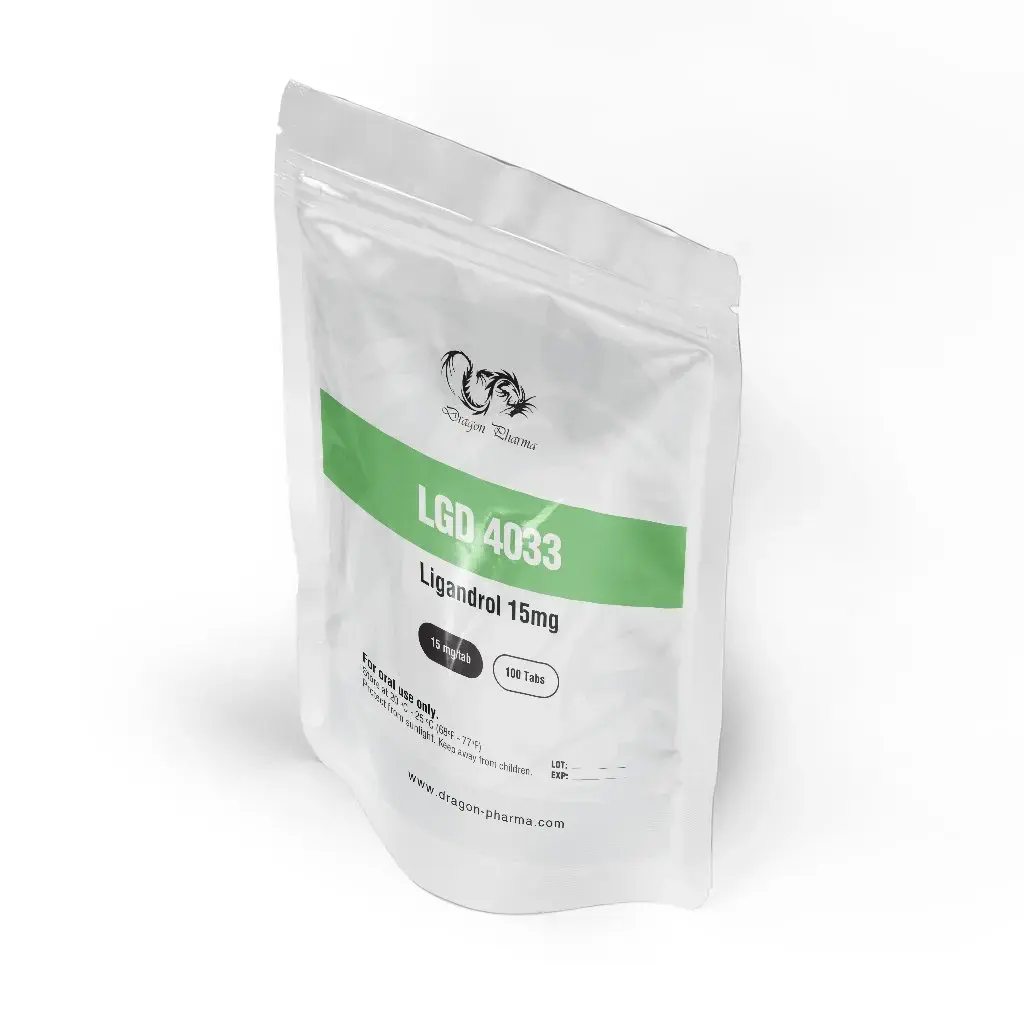
Original LGD 4033 by Dragon Pharma
Product Overview
LGD 4033 15 mg, commonly known as Ligandrol, is a non-steroidal Selective Androgen Receptor Modulator (SARM) manufactured by Dragon Pharma. Each tablet contains 15 mg of Ligandrol, a selective androgen receptor agonist originally developed to investigate treatments for muscle wasting, osteoporosis, frailty, and other conditions associated with the loss of lean body mass.
Unlike anabolic-androgenic steroids, LGD-4033 selectively targets androgen receptors in skeletal muscle and bone while minimizing activity in other androgen-sensitive tissues. This receptor selectivity has made Ligandrol one of the most extensively researched SARMs in both clinical development and sports performance discussions. Although early human studies demonstrated increases in lean body mass, LGD-4033 has not received regulatory approval for therapeutic use and remains an investigational compound in most countries.
Product Class
- Selective Androgen Receptor Modulator (SARM)
- Non-steroidal androgen receptor agonist
- Investigational research compound
- Oral performance research agent
Indications
Clinical Research
LGD-4033 has been investigated in research involving:
- Muscle wasting disorders
- Age-related sarcopenia
- Osteoporosis and bone health
- Frailty associated with aging
- Recovery from prolonged immobilization
- Lean body mass preservation
Performance Context
Within bodybuilding and athletic communities, Ligandrol is commonly discussed for:
- Lean muscle development
- Strength enhancement
- Body recomposition
- Support during calorie-restricted phases
- Preservation of muscle mass
- Resistance training adaptation
These performance-related applications are not approved medical indications and remain investigational.
Mechanism of Action
LGD-4033 selectively binds to androgen receptors located primarily within skeletal muscle and bone tissue. Activation of these receptors promotes anabolic signaling pathways associated with protein synthesis, muscle cell maintenance, and bone remodeling while exhibiting substantially lower activity in tissues such as the prostate compared with traditional anabolic steroids.
Its selective receptor activity has made Ligandrol an important investigational compound for studying anabolic therapies that aim to preserve muscle while reducing androgenic effects.
Potential Benefits
- Supports lean body mass development
- Promotes muscle protein synthesis
- May assist strength development
- Supports body recomposition programs
- May contribute to bone health research
- Supports preservation of lean tissue during caloric restriction
Synergy & Stacking
Within research and performance communities, LGD-4033 is frequently discussed alongside compounds targeting complementary physiological pathways.
- MK-677 (Ibutamoren): Frequently referenced because it targets the growth hormone and IGF-1 axis rather than androgen receptors.
- Cardarine (GW501516): Commonly discussed for endurance and metabolic research.
- Ostarine (MK-2866): Another investigational SARM often compared for lean mass preservation.
- RAD-140 (Testolone): Frequently referenced because of its high anabolic receptor affinity.
- L-Carnitine: Sometimes discussed alongside nutritional support strategies for energy metabolism.
- Creatine Monohydrate: Commonly combined in sports nutrition programs supporting resistance training.
Although these combinations are widely discussed within bodybuilding communities, no combination protocol has been established as safe or effective through large randomized clinical trials.
HRT/TRT Application
LGD-4033 is not approved for Testosterone Replacement Therapy (TRT) or Hormone Replacement Therapy (HRT). While it activates androgen receptors, it does not replace endogenous testosterone or serve as an approved treatment for male hypogonadism.
Clinical investigations have demonstrated that SARMs, including LGD-4033, may suppress endogenous reproductive hormone production. Consequently, Ligandrol should not be considered an alternative to medically supervised testosterone therapy.
Dosing and Use
LGD-4033 remains an investigational compound, and there are no universally accepted dosing recommendations for bodybuilding, athletic performance, or general wellness purposes.
Published human studies have evaluated Ligandrol under carefully controlled clinical conditions with standardized participant selection, laboratory monitoring, and safety assessments. These research protocols should not be interpreted as recommendations for unsupervised personal use.
Any investigational use should occur only under appropriate medical oversight with consideration of endocrine function, reproductive health, liver function, lipid metabolism, and overall clinical status.
Female Use
Although LGD-4033 demonstrates tissue-selective androgen receptor activity, it remains an androgen receptor agonist. Women may experience androgen-related adverse effects, and safety data in female populations remain limited.
Pregnant or breastfeeding women should not use LGD-4033. Because the compound remains investigational, routine use in women cannot be recommended outside properly supervised clinical research.
Comparative Analysis
LGD-4033 vs Ostarine (MK-2866)
- LGD-4033 generally demonstrates greater anabolic potency in experimental models.
- Ostarine has been investigated more extensively for preserving lean body mass during illness.
LGD-4033 vs RAD-140
- Both are investigational SARMs with selective androgen receptor activity.
- RAD-140 is generally regarded as having higher receptor affinity in preclinical research.
LGD-4033 vs Testosterone
- LGD-4033 selectively activates androgen receptors without supplying testosterone.
- Testosterone functions as a natural androgen hormone with broader physiological effects.
LGD-4033 vs Anabolic Steroids
- LGD-4033 is non-steroidal and was designed for greater tissue selectivity.
- Anabolic steroids generally affect androgen receptors throughout multiple tissues, resulting in broader anabolic and androgenic effects.
Conclusion
LGD 4033 15 mg (Ligandrol) is a non-steroidal Selective Androgen Receptor Modulator designed to selectively activate androgen receptors involved in skeletal muscle and bone metabolism. Originally investigated as a treatment for muscle wasting and osteoporosis, Ligandrol has become one of the most widely studied SARMs in sports performance research. While early clinical findings have demonstrated promising anabolic effects, LGD-4033 remains an investigational compound that has not received approval for routine therapeutic use. Individuals considering research involving Ligandrol should do so under appropriate medical supervision with careful evaluation of endocrine and overall health.
LGD 4033 FAQ
What is LGD-4033 used for?
LGD-4033 was originally developed for research into muscle wasting disorders, osteoporosis, and age-related loss of lean body mass. It has not been approved for routine medical treatment.
Is LGD-4033 an anabolic steroid?
No. LGD-4033 is a Selective Androgen Receptor Modulator (SARM) rather than an anabolic-androgenic steroid.
Does LGD-4033 increase muscle mass?
Early clinical studies demonstrated increases in lean body mass; however, additional long-term research is required to establish its safety and therapeutic role.
Can LGD-4033 replace testosterone therapy?
No. LGD-4033 is not an approved substitute for Testosterone Replacement Therapy and should not be used as an alternative to medically supervised hormone treatment.