


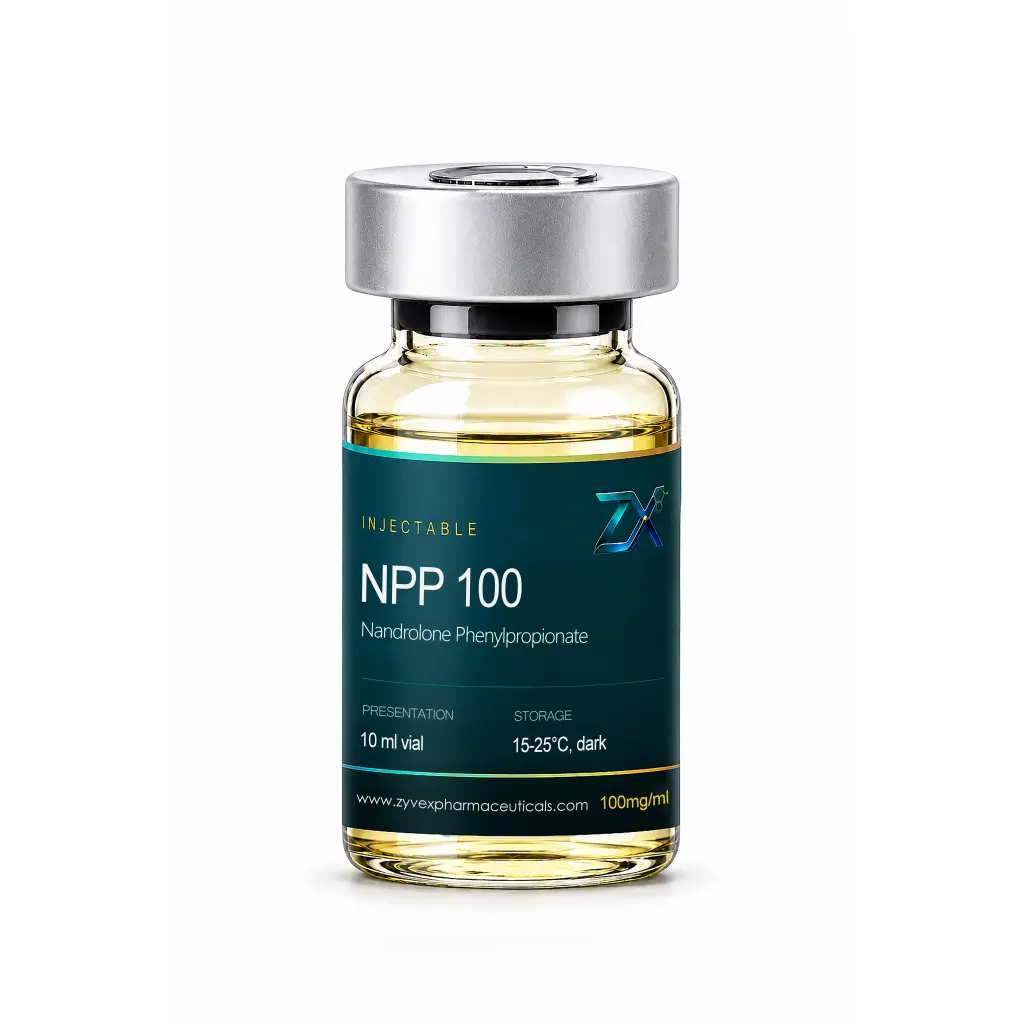
Product Class: Injectable Anabolic-Androgenic Steroid / 19-Nor Androgen
Active Ingredient: Nandrolone Phenylpropionate
Concentration: 100 mg/ml
Price For: 10 ml vial
Brand: Durabolin, NPP
NPP 100 by Zyvex Pharmaceuticals contains Nandrolone Phenylpropionate 100 mg/ml in a 10 ml injectable vial. Nandrolone Phenylpropionate, commonly abbreviated NPP and historically associated with the name Durabolin, is an injectable anabolic-androgenic steroid (AAS) belonging to the 19-nortestosterone class.
NPP delivers the same active steroid hormone, nandrolone, as Nandrolone Decanoate (Deca-Durabolin). The principal difference is the ester attached to the molecule. The phenylpropionate ester produces a shorter-duration depot than the decanoate ester, allowing circulating nandrolone exposure to rise and decline more rapidly.
Nandrolone has a history of legitimate pharmaceutical use in selected conditions involving anemia, severe catabolism, wasting, and other circumstances where anabolic effects were considered therapeutically useful. Its current approved indications vary substantially between jurisdictions.
In bodybuilding and strength sports, NPP is associated with lean and total mass development, strength, nitrogen retention, and recovery. These performance applications are non-medical and should not be confused with established therapeutic use.
The 100 mg/ml designation describes the concentration of Nandrolone Phenylpropionate in each milliliter. It is not a universal dose or validated bodybuilding administration protocol.
Nandrolone preparations have historically been used for their anabolic and erythropoietic properties. Depending on the formulation, jurisdiction, and period of medical practice, therapeutic applications have included selected forms of anemia, severe catabolic states, wasting, osteoporosis, and recovery from debilitating illness.
Many historical indications have subsequently been replaced by more targeted therapies. Nandrolone Phenylpropionate should therefore not be assumed to be a contemporary first-line treatment for these conditions.
NPP is also fundamentally different from conventional Testosterone Replacement Therapy. Although both testosterone and nandrolone activate androgen receptors, nandrolone does not reproduce the complete physiological endocrine profile of testosterone.
Within bodybuilding and performance communities, NPP is commonly discussed for:
NPP is sometimes preferred over Nandrolone Decanoate in non-medical settings because the shorter ester permits systemic nandrolone concentrations to change more rapidly after administration or discontinuation. This pharmacokinetic distinction does not make NPP inherently safe.
Following intramuscular administration, Nandrolone Phenylpropionate is released from the injection depot and hydrolyzed to active nandrolone. Nandrolone then binds intracellular androgen receptors and modifies transcription of androgen-responsive genes.
Androgen receptor activation can influence:
Nandrolone differs from testosterone in several important metabolic pathways. In tissues containing 5-alpha-reductase, nandrolone can be converted to dihydronandrolone (DHN), which has weaker androgenic activity than DHT. This helps explain why nandrolone can exhibit a different androgenic profile from testosterone.
Nandrolone can also undergo aromatization, although its estrogenic behavior differs quantitatively from testosterone. In addition, nandrolone has clinically relevant progestogenic activity, which complicates interpretation of estrogenic and sexual adverse effects.
Pharmacological and historical effects associated with nandrolone include:
Some athletes report improved subjective joint comfort while using nandrolone. This should not be interpreted as evidence that NPP repairs cartilage, heals tendon injuries, or protects joints from structural damage. Reduced discomfort can potentially mask an injury and permit continued loading of damaged tissue.
Potential anabolic effects must also be weighed against endocrine suppression, fertility impairment, adverse lipid changes, cardiovascular effects, androgenic reactions, and estrogenic/progestogenic consequences.
NPP is frequently discussed alongside other anabolic agents in bodybuilding. Such combinations are not standardized medical therapies and may increase cumulative endocrine, cardiovascular, hematological, reproductive, and androgenic risk.
Aromatase inhibitors such as Anastrozole or Exemestane are sometimes discussed when aromatizable steroids are used concurrently. They should not be considered automatic additions because excessive estradiol suppression can adversely affect bone, lipid metabolism, mood, and sexual function.
Cabergoline is also sometimes discussed because nandrolone has progestogenic activity and prolactin may become a concern in selected circumstances. However, prophylactic dopamine-agonist use without documented hyperprolactinemia is not medically justified and can introduce significant adverse effects of its own.
Nandrolone Phenylpropionate is not conventional Testosterone Replacement Therapy (TRT). Although nandrolone is an androgen receptor agonist, it does not reproduce the complete physiological roles of testosterone.
Testosterone acts directly as an androgen while also serving as a precursor to estradiol and DHT. Nandrolone follows different metabolic pathways and therefore cannot simply be substituted milligram-for-milligram for testosterone replacement.
Exogenous nandrolone can strongly suppress the hypothalamic-pituitary-gonadal axis. Reduced LH and FSH can decrease endogenous testosterone production, intratesticular testosterone, and sperm production.
Sexual dysfunction reported with nandrolone exposure may involve multiple interacting mechanisms, including suppressed endogenous testosterone, altered androgen-to-estrogen balance, progestogenic activity, and individual susceptibility.
For patients with confirmed male hypogonadism, established testosterone preparations such as Testosterone Enanthate or Testosterone Cypionate have a fundamentally different clinical role.
There is no medically validated bodybuilding dose or cycle for Nandrolone Phenylpropionate. Performance-oriented schedules circulated in bodybuilding communities should not be interpreted as clinical dosing recommendations.
NPP 100 contains 100 mg of Nandrolone Phenylpropionate per milliliter. A 10 ml vial therefore contains 1,000 mg of the esterified compound in total. This calculation describes vial composition only and does not establish an appropriate single dose, weekly exposure, or treatment course.
The phenylpropionate ester produces a shorter release profile than Nandrolone Decanoate. Consequently, systemic concentrations generally change more rapidly after initiation or discontinuation than with Deca-Durabolin.
There is no universal bodybuilding injection frequency, loading phase, cycle duration, escalation schedule, stacking dose, or post-cycle regimen that can safely be inferred from the 100 mg/ml concentration.
Nandrolone has historically been considered less androgenic in some tissues than testosterone, but virilization remains an important risk in women.
Potential androgenic effects include:
Some virilizing changes can be irreversible. The shorter phenylpropionate ester may allow systemic exposure to decline sooner after discontinuation than Nandrolone Decanoate, but it does not prevent virilization or guarantee reversibility.
There is no validated female bodybuilding dose that eliminates these risks. Nandrolone should also be avoided during pregnancy because androgen exposure can interfere with fetal development.
NPP 100 by Zyvex Pharmaceuticals contains Nandrolone Phenylpropionate 100 mg/ml in a 10 ml vial. NPP is a shorter-acting ester of nandrolone, a 19-nortestosterone-derived anabolic-androgenic steroid with historical medical applications and contemporary non-medical association with muscle mass, strength, and physique enhancement.
Compared with Deca-Durabolin, NPP releases the same active hormone but has a shorter pharmacokinetic profile because of its phenylpropionate ester. NPP is not conventional TRT and can suppress endogenous testosterone and fertility while producing androgenic, estrogenic, progestogenic, cardiovascular, and metabolic effects. The 100 mg/ml designation represents product concentration rather than a validated performance-enhancement dose.
NPP 100 contains Nandrolone Phenylpropionate at 100 mg/ml. It is an injectable 19-nortestosterone-derived anabolic-androgenic steroid with a shorter ester than Nandrolone Decanoate.
Both ultimately provide nandrolone. NPP uses the shorter phenylpropionate ester, whereas Deca-Durabolin uses the longer decanoate ester. As a result, NPP exposure rises and falls more rapidly.
Nandrolone activates androgen receptors and supports anabolic processes including protein synthesis and nitrogen retention. These mechanisms can increase lean tissue.
Nandrolone can undergo aromatization, although its estrogenic behavior differs from testosterone. Its progestogenic activity is also relevant when evaluating endocrine adverse effects.
The shorter phenylpropionate ester means nandrolone exposure declines more rapidly after discontinuation than with the long decanoate ester. This can make pharmacological changes appear sooner, although adverse effects do not necessarily resolve immediately.
Please log in to write NPP 100 review.
Androgen; Anabolic Steroid; Androgen Ester; Progestogen
Active Ingredient: Nandrolone Phenylpropionate
Concentration: 100 mg / mL
Price For: 10 mL Vial
Brand: Axiolabs
Product Class: Anabolic Steroid / 19-Nor Testosterone Derivative
Active Ingredient: Nandrolone Phenylpropionate (NPP)
Concentration: 150 mg/ml
Price For: 10 ml vial
Brand: Durabolin (NPP)
Androgen; Anabolic Steroid; Androgen Ester; Progestogen
Active Ingredient: Nandrolone Phenylpropionate
Concentration: 100 mg / mL
Price For: 10 mL Vial
Brand: Kalpa Pharmaceuticals
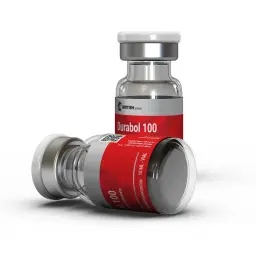
Androgen; Anabolic Steroid; Androgen Ester; Progestogen
Active Ingredient: Nandrolone Phenylpropionate
Concentration: 100 mg / mL
Price For: 10 mL Vial
Brand: British Dragon Pharmaceuticals