



Product Class: Injectable Anabolic-Androgenic Steroid / DHT Derivative
Active Ingredient: Methenolone Enanthate
Concentration: 100 mg/ml or 200 mg/ml
Price For: 10 ml vial
Brand: Primobolan, Primo
Primobolan 100 / 200 by Zyvex Pharmaceuticals contains Methenolone Enanthate at concentrations of 100 mg/ml or 200 mg/ml in a 10 ml injectable vial. Methenolone is a synthetic anabolic-androgenic steroid (AAS) derived from dihydrotestosterone (DHT). The enanthate ester creates a prolonged-release injectable formulation commonly known as Primobolan Depot or, informally, Primo.
Methenolone has historical pharmaceutical use in selected catabolic and wasting conditions where preservation or restoration of lean tissue was considered clinically desirable. Its role in contemporary medicine is limited, and availability and approved indications vary considerably by jurisdiction.
In bodybuilding, Primobolan is commonly associated with preservation of lean tissue, gradual anabolic effects, body recomposition, and relatively limited estrogen-related effects. Methenolone does not aromatize into estrogen, but that characteristic does not make non-medical use risk-free.
The 100 mg/ml and 200 mg/ml designations describe product concentration. They should not be interpreted as recommended doses or administration instructions.
Methenolone has historical medical associations with anabolic support in selected conditions characterized by significant catabolism, tissue loss, or prolonged recovery. Pharmaceutical Methenolone preparations have also been used in certain regions for other specialist indications.
Its contemporary clinical role is limited, and Methenolone should not be assumed to be an approved treatment for routine muscle gain, aging, fatigue, osteoporosis, or testosterone deficiency.
For medically diagnosed male hypogonadism, established testosterone replacement preparations are fundamentally different from Methenolone because Methenolone does not reproduce the complete physiological functions of testosterone.
Within bodybuilding and physique communities, Primobolan is commonly discussed for:
Methenolone is often characterized as comparatively "mild" relative to some anabolic steroids. This description can be misleading because it remains an androgenic anabolic drug capable of suppressing endogenous testosterone and affecting cardiovascular, reproductive, metabolic, and endocrine physiology.
Performance enhancement is not an approved indication, and Methenolone is prohibited in drug-tested competitive sport.
After administration, Methenolone Enanthate is slowly released from the injection depot. Ester hydrolysis subsequently produces active Methenolone, which binds to intracellular androgen receptors.
Androgen receptor activation alters gene transcription and may influence:
Methenolone is derived from DHT and does not undergo aromatization to estradiol. It therefore does not directly produce estrogenic effects through conversion to estrogen.
Unlike testosterone, Methenolone cannot provide the normal physiological balance of testosterone-derived estradiol. This distinction becomes especially important when endogenous testosterone production is suppressed.
Historical pharmacology and performance-oriented use commonly associate Methenolone with:
Primobolan is not a direct fat-burning medication. Any reduction in body-fat percentage depends primarily on energy balance, nutrition, physical activity, and underlying metabolic factors.
Its reputation for producing a relatively "dry" appearance largely reflects the absence of aromatization rather than direct elimination of body water or adipose tissue.
Methenolone is frequently discussed in combination with other anabolic agents in bodybuilding. Such combinations are not standardized medical treatments and can produce additive endocrine, cardiovascular, lipid, reproductive, and androgenic effects.
Because Methenolone itself does not aromatize, an aromatase inhibitor is not automatically required because Primobolan is present. If an aromatizable androgen such as testosterone is also being used, estrogen exposure depends on that compound, overall androgen exposure, and individual physiology.
Using Anastrozole, Exemestane, or another estrogen-lowering medication without a clinical indication can result in excessive estrogen suppression and associated effects on bone, lipids, mood, and sexual function.
Methenolone Enanthate is not conventional Testosterone Replacement Therapy (TRT). Although it activates androgen receptors, it cannot reproduce the complete endocrine functions of testosterone.
Testosterone serves as an androgen while also acting as a precursor to physiologically important estradiol and DHT. Methenolone does not aromatize to estradiol and therefore cannot provide this normal estrogenic component of testosterone physiology.
Exogenous Methenolone can suppress the hypothalamic-pituitary-gonadal axis. Reduced LH and FSH signaling can lead to lower endogenous testosterone production, decreased intratesticular testosterone, reduced sperm production, and impaired fertility.
For men with confirmed hypogonadism, medically established testosterone formulations such as Testosterone Enanthate or Testosterone Cypionate have a fundamentally different clinical role.
There is no universally accepted regulator-approved bodybuilding dose or cycle for Methenolone Enanthate. Performance regimens circulated in bodybuilding communities should not be interpreted as medically validated dosing protocols.
The two Zyvex Pharmaceuticals formulations differ in concentration:
Both products contain the same active steroid ester. The principal difference is the amount of Methenolone Enanthate contained in each milliliter.
A 10 ml vial of the 100 mg/ml formulation contains 1,000 mg of Methenolone Enanthate in total, whereas a 10 ml vial of the 200 mg/ml formulation contains 2,000 mg. These values describe vial content rather than an appropriate individual dose.
The enanthate ester produces prolonged release following injection. Consequently, systemic exposure changes gradually after administration, and adverse effects may persist after further administration has stopped.
There is no medically validated loading phase, bodybuilding cycle length, escalation schedule, or post-cycle regimen that can be inferred from the 100 mg/ml or 200 mg/ml concentration.
Methenolone has historically been regarded as less androgenic than several other anabolic steroids, which has contributed to its reputation in female bodybuilding. However, virilization remains a clinically important risk.
Potential androgenic effects in women include:
Some virilizing changes may be irreversible. The long enanthate ester is an additional concern because drug exposure cannot be terminated immediately once the compound has been administered.
There is no validated female bodybuilding dose that eliminates virilization risk. Methenolone should also be avoided during pregnancy because androgen exposure may interfere with fetal sexual development.
Primobolan 100 / 200 by Zyvex Pharmaceuticals contains Methenolone Enanthate at 100 mg/ml or 200 mg/ml in a 10 ml vial. Methenolone is a long-acting DHT-derived anabolic-androgenic steroid characterized by androgen receptor activity and an inability to aromatize into estrogen.
Its historical pharmaceutical background differs from its contemporary association with bodybuilding, where it is primarily discussed for gradual lean-tissue development and physique conditioning. Primobolan is not conventional TRT, and its reputation as a comparatively mild anabolic steroid should not be confused with an absence of endocrine or cardiovascular risk. The 100 mg/ml and 200 mg/ml values represent product concentrations rather than validated performance-enhancement doses.
Primobolan 100 / 200 contains Methenolone Enanthate at either 100 mg/ml or 200 mg/ml. Methenolone is a DHT-derived anabolic-androgenic steroid, while the enanthate ester provides prolonged release after injection.
The active compound is the same. Primobolan 100 contains 100 mg/ml of Methenolone Enanthate, while Primobolan 200 contains 200 mg/ml. The difference is concentration rather than the fundamental pharmacological mechanism.
Methenolone activates androgen receptors and can support anabolic processes such as protein synthesis and nitrogen retention. Its performance reputation is generally associated with gradual lean-mass development rather than rapid increases in total body weight.
No. Methenolone is a DHT-derived anabolic steroid and does not aromatize into estradiol.
The 200 mg/ml formulation is more concentrated, meaning each milliliter contains twice as much Methenolone Enanthate as the 100 mg/ml formulation. This does not mean that it is pharmacologically superior or that 200 mg represents an appropriate dose.
Please log in to write Primobolan 100/200 review.
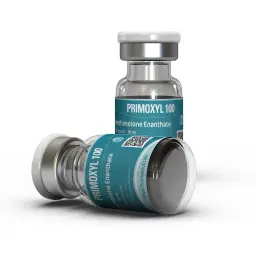
Androgen; Anabolic Steroid; Androgen Ester
Active Ingredient: Methenolone Enanthate
Concentration: 100 mg / mL
Price For: 10 mL vial
Brand: Kalpa Pharmaceuticals
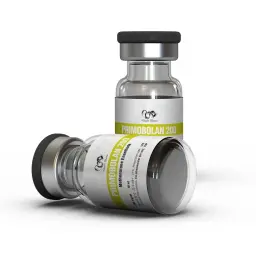
Product Class: Anabolic Steroid / DHT-Derivative
Active Ingredient: Methenolone Enanthate
Concentration: 200 mg/ml
Price For: 10 ml vial
Brand: Primobolan (Primo)
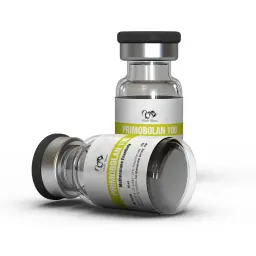
Product Class: Anabolic Steroid / DHT-Derivative
Active Ingredient: Methenolone Enanthate
Concentration: 100 mg/ml
Price For: 10 ml vial
Brand: Primobolan (Primo)
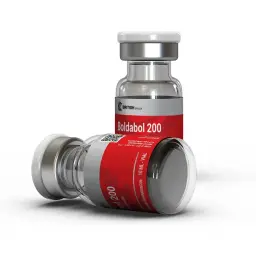
Androgen; Anabolic Steroid; Androgen Ester
Active Ingredient: Boldenone Undecylenate
Concentration: 200 mg / mL
Price For: 10 mL Vial
Brand: British Dragon Pharmaceuticals