


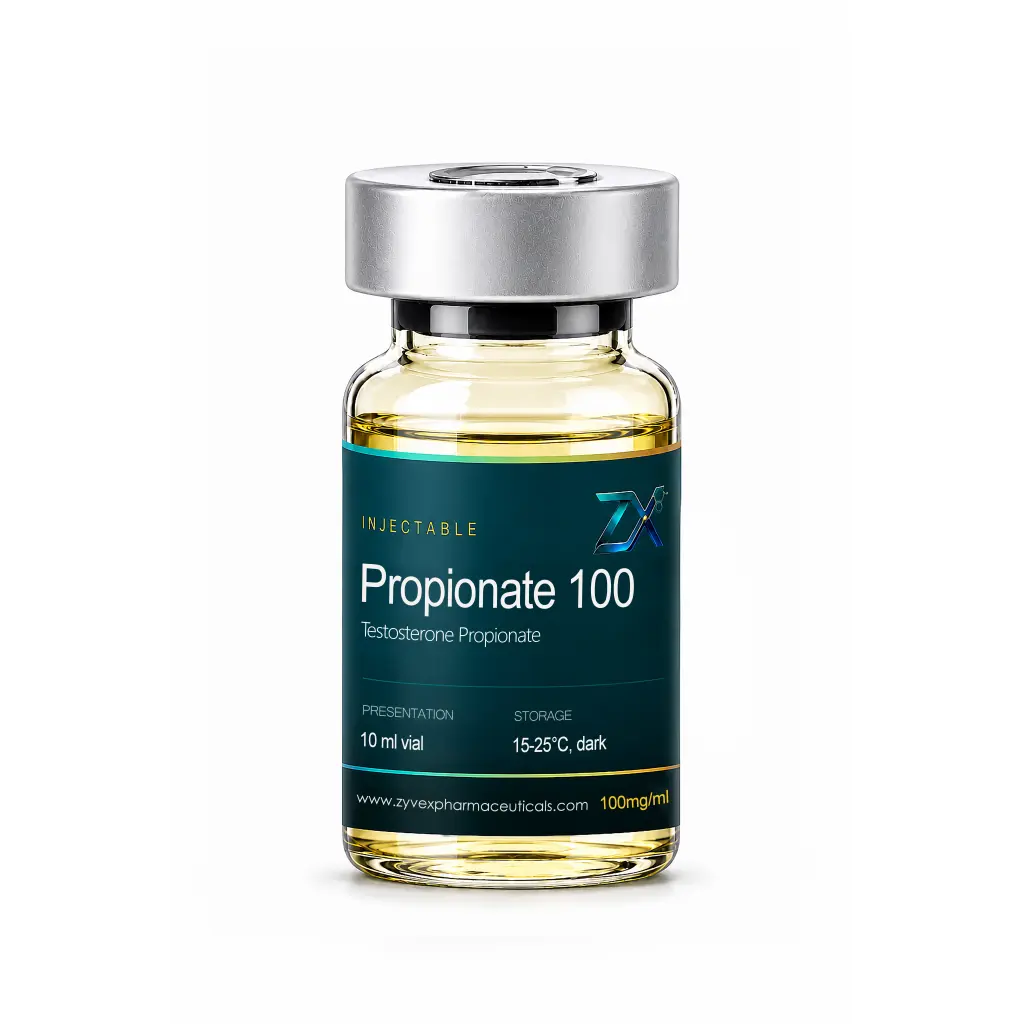
Product Class: Injectable Androgen / Short-Acting Testosterone Ester
Active Ingredient: Testosterone Propionate
Concentration: 100 mg/ml
Price For: 10 ml vial
Brand: Testosterone Propionate
Propionate 100 by Zyvex Pharmaceuticals contains Testosterone Propionate 100 mg/ml in a 10 ml injectable vial. Testosterone Propionate is a short-acting ester of testosterone, the principal endogenous androgen in men. Once the propionate ester is cleaved, the active hormone is testosterone and acts through the same androgen-receptor pathways as naturally produced testosterone.
Compared with longer-acting preparations such as Testosterone Enanthate or Testosterone Cypionate, the propionate ester produces faster changes in circulating testosterone concentrations after administration and discontinuation. This shorter pharmacokinetic profile is the principal characteristic that distinguishes Testosterone Propionate from longer testosterone esters.
The concentration of 100 mg/ml describes product strength only. It should not be interpreted as a universal therapeutic dose, injection amount, or performance-enhancement protocol.
Testosterone preparations are used clinically for androgen replacement in appropriately diagnosed male hypogonadism. Treatment generally requires compatible symptoms together with repeatedly confirmed low testosterone concentrations and evaluation of the underlying cause.
Clinical indications may include testosterone deficiency associated with:
Testosterone Propionate has historical and regional therapeutic use, but longer-acting testosterone esters are more commonly used in many contemporary TRT settings because they allow less frequent administration.
Within bodybuilding and strength-training communities, Testosterone Propionate is commonly discussed for:
These applications represent non-medical use and should not be confused with evidence-based testosterone replacement therapy. Exogenous testosterone is also prohibited in drug-tested sport unless a valid therapeutic-use exemption applies.
Following injection, Testosterone Propionate is released from the injection depot and hydrolyzed to active testosterone. Testosterone then binds to intracellular androgen receptors in multiple tissues and modifies transcription of androgen-responsive genes.
Androgen receptor activation influences:
Testosterone can also be converted to dihydrotestosterone (DHT) through 5-alpha-reductase and to estradiol through aromatase. These metabolites contribute to normal testosterone physiology but can also contribute to androgenic and estrogenic adverse effects when exposure is excessive.
When used appropriately for confirmed testosterone deficiency, potential benefits may include:
The magnitude of benefit depends on baseline androgen status, age, comorbidities, treatment adherence, and whether symptoms were genuinely caused by testosterone deficiency.
Testosterone Propionate is frequently discussed as a foundational androgen in bodybuilding because many anabolic compounds suppress endogenous testosterone production. These combinations are not medically standardized regimens and can increase endocrine, cardiovascular, reproductive, hematological, and androgen-related risks.
Aromatase inhibitors such as Anastrozole or Exemestane are frequently mentioned alongside testosterone because testosterone can convert to estradiol. They should not be used automatically. Excessive estrogen suppression can adversely affect bone, lipids, sexual function, mood, and overall well-being.
Testosterone Propionate can provide testosterone replacement, but it is less commonly used for routine long-term TRT than longer-acting esters such as Testosterone Enanthate or Testosterone Cypionate in many contemporary settings.
The propionate ester produces shorter-duration exposure, which means testosterone concentrations can change more rapidly following administration or discontinuation. This may offer greater pharmacokinetic flexibility in selected circumstances, but it can also require more frequent administration to maintain stable exposure.
TRT aims to restore testosterone into an appropriate physiological range and improve clinically relevant symptoms while avoiding excessive androgen exposure.
Monitoring commonly includes:
Exogenous testosterone suppresses hypothalamic-pituitary-gonadal signaling. LH and FSH may decline, reducing intratesticular testosterone and sperm production. Men who wish to preserve fertility therefore require a different treatment discussion from those receiving straightforward testosterone replacement.
Testosterone Propionate dosing is individualized according to the clinical indication, serum testosterone levels, symptom response, age, comorbidities, and applicable prescribing information.
Propionate 100 contains 100 mg of Testosterone Propionate per ml. This figure represents product concentration and should not be interpreted as a universal dose or administration schedule.
Because Testosterone Propionate is shorter acting than Enanthate or Cypionate, changes in circulating exposure occur more quickly. Laboratory results should therefore be interpreted in relation to the timing of the blood sample and the most recent administration.
Performance-oriented regimens circulated in bodybuilding communities often involve supraphysiological exposure and should not be confused with medical TRT. There is no single medically validated bodybuilding dose, cycle length, or dose-escalation schedule for this product.
Testosterone may have selected specialist applications in women, but routine use of an injectable Testosterone Propionate product for physique enhancement carries a meaningful risk of virilization.
Potential androgenic effects include:
Some virilizing effects may be irreversible. Testosterone should also be avoided during pregnancy because androgen exposure can interfere with fetal sexual development.
The shorter propionate ester may allow systemic exposure to decline more rapidly after discontinuation than with Enanthate or Cypionate, but this does not eliminate the risk of irreversible androgenic effects.
Propionate 100 by Zyvex Pharmaceuticals contains Testosterone Propionate 100 mg/ml in a 10 ml vial. It is a short-acting esterified testosterone formulation that ultimately delivers the same active androgen as endogenous testosterone.
Its defining pharmacological characteristic is a faster release and decline profile than longer esters such as Testosterone Enanthate or Cypionate. Testosterone Propionate can have a role in androgen replacement, while its non-medical use in bodybuilding is distinct from TRT. The 100 mg/ml concentration represents product strength only and does not establish a validated therapeutic or performance-enhancement dose.
It is an injectable short-acting testosterone ester containing 100 mg of Testosterone Propionate per milliliter. After ester cleavage, the active hormone is testosterone.
Yes. The propionate ester produces faster changes in testosterone exposure than the longer enanthate ester.
Neither ester is universally better. Propionate offers a shorter exposure profile, while Cypionate provides longer-lasting release. Choice in medical care depends on treatment goals, tolerability, availability, and monitoring.
Yes. Once released, testosterone can be converted to estradiol by aromatase. The ester changes release characteristics but does not eliminate testosterone's normal estrogenic metabolism.
No. One hundred milligrams per milliliter describes product concentration. It should not be interpreted as an individualized TRT dose or a recommended administration amount.
Testosterone activates androgen receptors and supports protein synthesis and lean-tissue development. In men with true hypogonadism, physiological replacement may improve body composition. Supraphysiological bodybuilding use is a separate non-medical context.
Please log in to write Propionate 100 review.
Androgen; Anabolic Steroid; Androgen Ester
Active Ingredient: Testosterone Propionate
Concentration: 100 mg / mL
Price For: 10 mL Vial
Brand: Kalpa Pharmaceuticals

This Cycle Includes:
- Testaplex P 100: 3 x 10 ml/vial (100 mg/ml);
- Stanoplex: 200 Pills (10 mg/pill);
- Arimiplex: 50 Pills (1 mg/pill);
Brand: Axiolabs

This Cycle Includes:
- Testaplex P 100: 3 x 10ml (100 mg/ml);
- Trenaplex A 100: 3 x 10ml (100 mg/ml);
- Stanoplex: 200 Pills (10 mg/pill);
- Arimiplex tab: 50 Pills (1 mg/pill);
Brand: AxioLabs
Androgen; Anabolic Steroid; Androgen Ester
Active Ingredient: Testosterone Propionate
Concentration: 100 mg / mL
Price For: 10 mL Vial
Brand: Axiolabs