


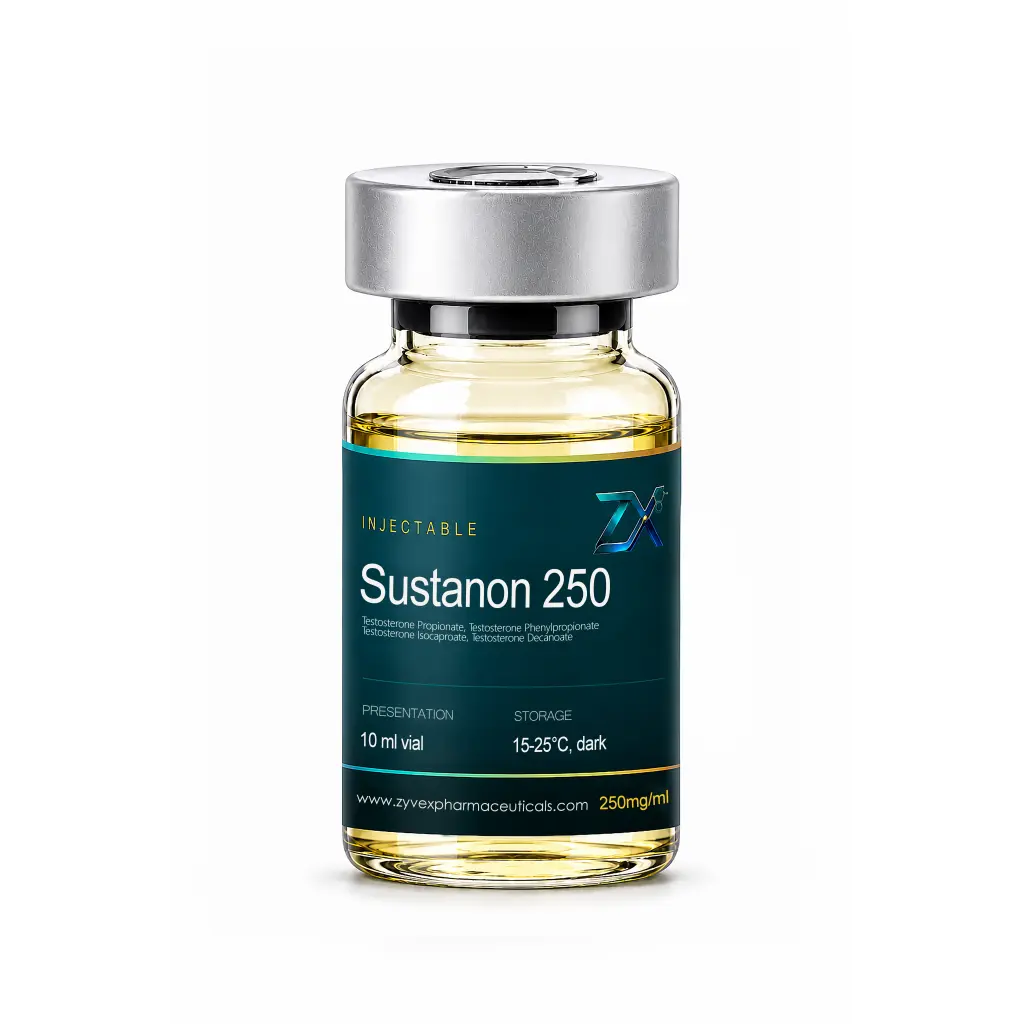
Product Class: Injectable Androgen / Multi-Ester Testosterone / Anabolic-Androgenic Steroid
Active Ingredient: Testosterone Propionate, Testosterone Phenylpropionate, Testosterone Isocaproate, Testosterone Decanoate
Concentration: 250 mg/ml
Price For: 10 ml vial
Brand: Sustanon
Sustanon 250 by Zyvex Pharmaceuticals is a multi-ester injectable testosterone formulation containing a stated total of 250 mg of esterified testosterone per milliliter. The formulation combines four testosterone esters with different release characteristics: Testosterone Propionate 30 mg, Testosterone Phenylpropionate 60 mg, Testosterone Isocaproate 60 mg, and Testosterone Decanoate 100 mg per milliliter.
The purpose of a mixed-ester formulation is to combine relatively faster-releasing and longer-lasting testosterone esters in a single preparation. After release from the injection depot, each ester is hydrolyzed and ultimately provides the same biologically active hormone: testosterone.
Testosterone is the principal endogenous male androgen and has established medical use in appropriately diagnosed androgen deficiency. Sustanon-type formulations have been used for testosterone replacement in various jurisdictions, although availability, approved indications, and prescribing schedules differ between countries.
Outside medical testosterone replacement, Sustanon is also encountered in bodybuilding and strength-sport settings for muscle mass, strength, recovery, and anabolic support. Such performance use is distinct from medically supervised TRT and generally produces non-physiological androgen exposure.
The 250 mg/ml label describes the combined quantity of the four esterified testosterone compounds per milliliter. It should not automatically be interpreted as a universal TRT dose or performance-enhancement regimen.
Each milliliter contains the following stated ester composition:
Testosterone replacement is used in appropriately evaluated patients with hypogonadism when testosterone deficiency is supported by compatible clinical features and appropriately obtained laboratory measurements.
Depending on the underlying diagnosis, testosterone deficiency may result from primary testicular dysfunction or abnormalities involving hypothalamic or pituitary regulation.
Potential clinical objectives of testosterone replacement can include improvement or maintenance of:
Testosterone treatment should not be based solely on nonspecific symptoms because fatigue, reduced libido, mood changes, and reduced physical performance can have numerous causes unrelated to androgen deficiency.
In bodybuilding and strength sports, Sustanon is commonly associated with:
These applications constitute non-medical performance enhancement rather than TRT. Testosterone is also prohibited in drug-tested competitive sport except where applicable anti-doping rules recognize a valid therapeutic-use exemption.
Following intramuscular administration, the four testosterone esters are released from the injection depot at different rates. Esterases subsequently cleave the ester groups, producing biologically active testosterone.
Free testosterone enters androgen-responsive cells and binds intracellular androgen receptors. The activated receptor complex modifies gene transcription and contributes to effects involving:
Testosterone can also undergo two clinically important metabolic conversions.
5-alpha-reductase converts testosterone to dihydrotestosterone (DHT), a more potent androgen in selected tissues. Aromatase converts testosterone to estradiol, which has important physiological functions in men involving bone, sexual function, body composition, and other systems.
Consequently, estrogen is not simply an unwanted testosterone metabolite. Excessive estradiol can cause problems in some circumstances, but excessive suppression can also be harmful.
In appropriately diagnosed testosterone deficiency, clinically supervised testosterone replacement may improve or maintain:
The mixed-ester formulation is intended to provide testosterone exposure through components with different release characteristics. The shorter esters contribute earlier release, while the longer esters extend the depot effect.
Benefits in medically deficient patients should not be extrapolated directly to supraphysiological bodybuilding use. Higher exposure can increase adverse effects without producing a proportional increase in desirable outcomes.
Sustanon is frequently discussed as a foundational androgen alongside other anabolic agents in non-medical bodybuilding. These combinations are not standardized clinical treatments and can increase cardiovascular, endocrine, reproductive, and metabolic risk.
Because testosterone can aromatize to estradiol, aromatase inhibitors such as Anastrozole or Exemestane are sometimes discussed. They should not be considered automatic additions to testosterone therapy. Clinical symptoms and appropriate laboratory assessment are more informative than routine estrogen suppression.
Using multiple anabolic agents simultaneously can make adverse effects harder to attribute to a specific compound and can increase cumulative cardiovascular and endocrine burden.
Sustanon-type testosterone formulations can have a legitimate role in Testosterone Replacement Therapy. Their purpose is to restore testosterone exposure in appropriately diagnosed patients rather than to produce supraphysiological androgen concentrations.
The four-ester formulation differs from single-ester products because it combines relatively rapid and prolonged depot components. Testosterone Propionate and Phenylpropionate contribute shorter-duration release, while Isocaproate and especially Decanoate extend testosterone delivery.
TRT should be individualized according to clinical response, serum testosterone measurements, formulation characteristics, and applicable prescribing information. The appropriate interpretation of a testosterone laboratory result also depends on when blood was collected relative to administration.
Monitoring during medically supervised testosterone therapy can include:
Exogenous testosterone suppresses hypothalamic and pituitary gonadotropin signaling. Reduced LH and FSH can decrease intratesticular testosterone, testicular volume, and sperm production. Men who currently desire fertility or expect to pursue fertility should therefore discuss reproductive goals before starting long-term testosterone therapy.
Sustanon 250 contains 250 mg of combined testosterone esters per milliliter. In a 10 ml vial, this corresponds to a stated total of 2,500 mg of esterified testosterone compounds. This calculation describes product composition only and is not a recommended dose or treatment course.
Medical testosterone dosing depends on the approved formulation, diagnosis, individual pharmacokinetic response, laboratory findings, treatment goals, and prescribing guidance applicable in the relevant jurisdiction.
The four-ester mixture also means that Sustanon should not be treated as pharmacokinetically identical to Testosterone Propionate, Enanthate, Cypionate, or Undecanoate used individually.
There is no medically validated bodybuilding cycle, dose-escalation schedule, stacking dose, or post-cycle regimen that can safely be inferred from the 250 mg/ml concentration.
Non-medical supraphysiological exposure can increase the likelihood of erythrocytosis, unfavorable lipid changes, blood-pressure elevation, acne, androgenic hair loss, gynecomastia or fluid retention in susceptible individuals, fertility suppression, and other androgen-related complications.
Testosterone has selected specialist medical applications in women, but systemic testosterone exposure requires careful indication-specific dosing because excessive androgen exposure can cause virilization.
Potential androgenic effects include:
Voice deepening and clitoral enlargement may be irreversible. A concentrated injectable formulation such as Sustanon 250 should therefore not be interpreted as a routine female hormone or physique-enhancement preparation.
Testosterone exposure during pregnancy can interfere with fetal sexual development and requires particular caution.
Sustanon 250 by Zyvex Pharmaceuticals is a 250 mg/ml multi-ester testosterone formulation containing Testosterone Propionate 30 mg, Testosterone Phenylpropionate 60 mg, Testosterone Isocaproate 60 mg, and Testosterone Decanoate 100 mg per milliliter. The 10 ml vial contains a stated total of 2,500 mg of esterified testosterone compounds.
The mixed-ester design combines relatively rapid and prolonged testosterone-release components while ultimately delivering the same active hormone. Sustanon-type formulations can have a legitimate role in medically supervised testosterone replacement, while bodybuilding use represents a fundamentally different, non-medical context. Testosterone can also produce estrogenic and androgenic effects and suppress endogenous testosterone production and fertility. The 250 mg/ml designation therefore describes product concentration rather than a universal TRT or performance-enhancement dose.
Sustanon 250 is a mixed-ester injectable testosterone formulation containing Testosterone Propionate, Phenylpropionate, Isocaproate, and Decanoate for a stated combined concentration of 250 mg/ml.
Sustanon-type formulations are used in some jurisdictions for testosterone replacement in appropriately diagnosed androgen deficiency. Exact approved indications depend on the product and country.
Yes, mixed-ester testosterone formulations have legitimate TRT applications. TRT should be based on confirmed testosterone deficiency and individualized medical monitoring.
Testosterone increases androgen-receptor signaling, muscle protein synthesis, and nitrogen retention and can increase lean mass. Supraphysiological use for bodybuilding is distinct from therapeutic replacement.
Yes. Testosterone can be converted to estradiol through the aromatase enzyme. Estradiol also has important physiological functions in men, so complete suppression is not a therapeutic objective.
Neither formulation is universally superior. Sustanon provides a composite multi-ester release profile, while Enanthate provides simpler single-ester pharmacokinetics. Selection for legitimate TRT depends on availability, clinical response, monitoring, and prescribing considerations.
Please log in to write Sustanon 250 review.
Androgen; Anabolic Steroid; Androgen Ester
Active Ingredient: Boldenone Undecylenate
Concentration: 200 mg / mL
Price For: 10 mL Vial
Brand: British Dragon Pharmaceuticals
Androgen; Anabolic Steroid; Androgen Ester
Active Ingredient: Boldenone Undecylenate
Concentration: 300 mg / mL
Price For: 10 mL Vial
Brand: British Dragon Pharmaceuticals
Androgen; Anabolic Steroid; Progestogen
Active Ingredient: Nandrolone Decanoate
Concentration: 250 mg / mL
Price For: 10 mL Vial
Brand: British Dragon Pharmaceuticals
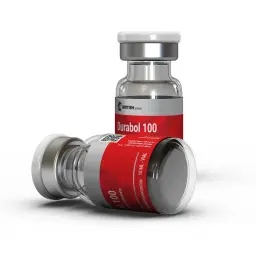
Androgen; Anabolic Steroid; Androgen Ester; Progestogen
Active Ingredient: Nandrolone Phenylpropionate
Concentration: 100 mg / mL
Price For: 10 mL Vial
Brand: British Dragon Pharmaceuticals