


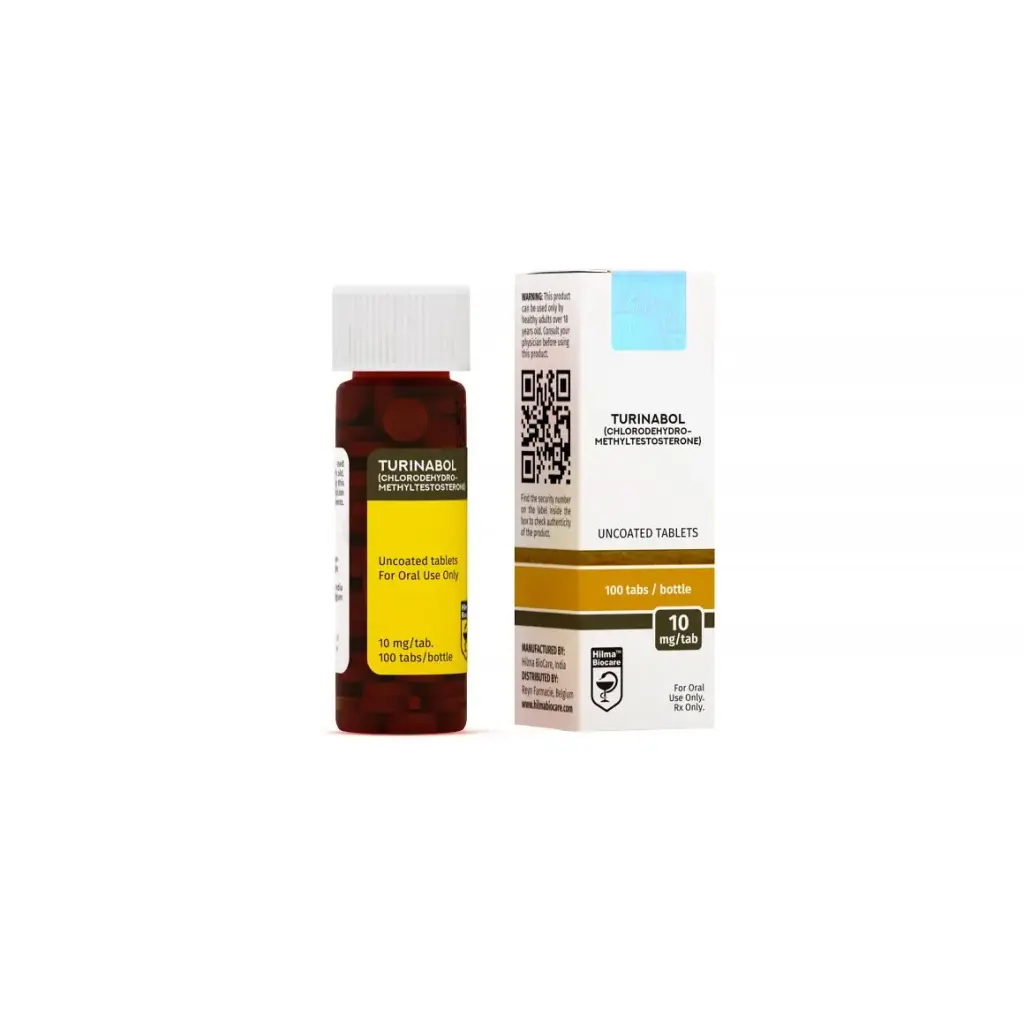
Product Class: Oral Anabolic-Androgenic Steroid (AAS)
Active Ingredient: 4-Chlorodehydromethyltestosterone
Concentration: 20 mg/tab
Price For: 100 tablets
Brand: Turinabol
Turanabol 20 mg by Zyvex Pharmaceuticals contains 4-Chlorodehydromethyltestosterone 20 mg per tablet and is supplied in packs of 100 tablets. The active compound is commonly known as Chlorodehydromethyltestosterone (CDMT) or Oral Turinabol.
Turinabol is an orally active synthetic anabolic-androgenic steroid (AAS) structurally related to Methandienone (Dianabol). The addition of a chlorine substitution substantially changes its pharmacological profile, particularly by preventing conventional aromatization to estrogen. It is also a 17-alpha-alkylated steroid, a modification that improves oral bioavailability but contributes to clinically important hepatic and metabolic concerns.
Turinabol was historically developed as a pharmaceutical anabolic steroid but is now best known for its association with performance enhancement and competitive-sport doping. It is not a standard contemporary treatment for testosterone deficiency or routine hormone replacement.
In non-medical performance contexts, Turinabol is generally associated with lean-tissue development, strength, nitrogen retention, and comparatively limited estrogen-related water retention. These characteristics do not establish medical safety.
The 20 mg designation describes the amount of 4-Chlorodehydromethyltestosterone contained in each tablet. It should not be interpreted as a recommended daily dose, bodybuilding cycle, or other performance-enhancement protocol.
Chlorodehydromethyltestosterone was historically developed as an anabolic pharmaceutical and was used in selected medical contexts where anabolic support was considered desirable. Its role in contemporary evidence-based medicine is extremely limited, and it should not be assumed to have a current routine indication merely because it was previously manufactured as a pharmaceutical drug.
Turinabol is not conventional Testosterone Replacement Therapy. Although it activates androgen receptors, it cannot reproduce the complete endocrine physiology of testosterone and is not an appropriate substitute for established testosterone formulations in patients with confirmed hypogonadism.
Turinabol is primarily encountered today in non-medical bodybuilding and athletic-performance discussions involving:
Compared with highly aromatizable oral anabolic steroids, Turinabol is generally associated with less estrogen-mediated fluid accumulation. This can make changes in body weight appear less dramatic than with compounds such as Methandienone, but scale weight alone does not determine anabolic effectiveness.
Performance enhancement with Turinabol is non-medical, and the compound is prohibited in drug-tested competitive sport.
4-Chlorodehydromethyltestosterone enters androgen-responsive cells and interacts with intracellular androgen receptors. The resulting receptor complex alters transcription of androgen-responsive genes and contributes to anabolic and androgenic effects.
Relevant androgen-receptor-mediated processes include:
Turinabol is structurally related to Methandienone but includes a chlorine substitution at carbon 4. This modification prevents conventional aromatization and therefore differentiates its estrogenic profile from Dianabol.
Turinabol does not conventionally convert to estradiol through aromatase. Direct estrogen-mediated effects such as gynecomastia and water retention are therefore less characteristic of the compound itself than with aromatizable testosterone derivatives.
Absence of aromatization does not mean absence of endocrine effects. Exogenous Turinabol can suppress hypothalamic-pituitary-gonadal signaling, reducing LH and FSH and thereby decreasing endogenous testosterone production and spermatogenesis.
The effects commonly associated with Turinabol in performance contexts arise from its anabolic-androgenic activity. These include:
Because Turinabol does not aromatize, it is not generally associated with the same degree of estrogen-mediated body-weight fluctuation as Methandienone. This does not make it medically benign.
The 17-alpha-alkylated structure introduces important hepatic considerations. Oral anabolic steroids can also produce unfavorable changes in cardiovascular risk markers, particularly reductions in HDL cholesterol and changes in other lipid parameters.
Turinabol is frequently discussed alongside injectable and oral anabolic agents in bodybuilding. These combinations are not medically validated treatment protocols and can increase cumulative cardiovascular, hepatic, endocrine, reproductive, and androgenic risk.
Because Turinabol itself does not aromatize, an aromatase inhibitor such as Anastrozole or Exemestane does not prevent Turinabol from converting into estrogen. Whether estrogen management is medically appropriate depends primarily on other aromatizable drugs, symptoms, and laboratory findings.
Combining Turinabol with other 17-alpha-alkylated oral anabolic steroids can increase hepatic and lipid-related burden. The absence of a direct pharmacological conflict does not make such combinations clinically validated or safe.
Turinabol is not Testosterone Replacement Therapy (TRT). Androgen-receptor activity alone does not make an anabolic steroid a physiological testosterone substitute.
Testosterone performs important functions directly and through conversion to estradiol and DHT. These pathways contribute to sexual function, bone health, reproductive physiology, body composition, and numerous other biological processes.
Turinabol does not aromatize and cannot reproduce this complete hormonal environment. At the same time, exogenous 4-Chlorodehydromethyltestosterone can suppress LH and FSH, thereby reducing endogenous testosterone production.
Suppression can also lower intratesticular testosterone and sperm production, potentially impairing fertility.
For patients with appropriately diagnosed testosterone deficiency, established testosterone formulations such as Testosterone Enanthate, Testosterone Cypionate, or other approved testosterone products have a fundamentally different therapeutic role.
There is no medically validated contemporary bodybuilding dose or cycle for Turinabol. Performance regimens circulated in bodybuilding communities should not be interpreted as clinical dosing recommendations.
Turanabol contains 20 mg of 4-Chlorodehydromethyltestosterone per tablet. A pack of 100 tablets therefore contains a stated total of 2,000 mg of active compound. This calculation describes package composition only and does not establish an appropriate daily dose or treatment course.
The 20 mg tablet strength should not be interpreted as a universal single dose. Increasing exposure can increase hepatic, cardiovascular, endocrine, reproductive, and androgenic risk rather than simply increasing anabolic effects.
Because Turinabol is a 17-alpha-alkylated oral anabolic steroid, liver and metabolic effects are particularly relevant. Oral administration does not eliminate the need to consider systemic toxicity.
No medically validated bodybuilding loading phase, dose-escalation ladder, cycle duration, stacking dose, or post-cycle regimen can safely be inferred from the 20 mg tablet strength.
Although Turinabol is sometimes described in performance communities as having a more favorable anabolic-to-androgenic profile than some other steroids, virilization remains a clinically important risk in women.
Potential androgenic effects include:
Some virilizing changes, particularly voice deepening and clitoral enlargement, can be irreversible.
The absence of aromatization does not reduce the compound's fundamental androgenic potential. Likewise, the 20 mg tablet strength should not be interpreted as a validated female performance dose.
Exposure during pregnancy presents particular concern because synthetic androgens can interfere with fetal development.
Turanabol 20 mg by Zyvex Pharmaceuticals contains 4-Chlorodehydromethyltestosterone 20 mg per tablet and is supplied in packs of 100 tablets. Commonly known as Turinabol, the compound is an orally active, non-aromatizing anabolic-androgenic steroid with historical pharmaceutical use and a prominent association with performance enhancement.
Turinabol's pharmacological profile differs from Dianabol because its 4-chloro modification prevents conventional aromatization, resulting in comparatively limited direct estrogen-mediated water retention. However, it remains a 17-alpha-alkylated oral anabolic steroid capable of causing hepatic, lipid, cardiovascular, endocrine, reproductive, and androgenic adverse effects. It is not conventional TRT, and the 20 mg tablet strength describes product content rather than a validated performance-enhancement dose.
Turinabol has historical pharmaceutical anabolic use but is now primarily encountered in non-medical bodybuilding and athletic-performance contexts. It is not a routine contemporary TRT medication.
Turinabol activates androgen receptors and supports anabolic processes including protein synthesis and nitrogen retention. These mechanisms can promote lean-tissue development.
No. The 4-chloro structural modification prevents conventional aromatization to estradiol, so direct estrogen-mediated effects are less characteristic than with compounds such as Methandienone or testosterone.
No. Twenty milligrams describes the amount of active substance contained in each tablet. It should not be interpreted as a medically validated bodybuilding dose or daily administration recommendation.
The compounds are structurally related, but Turinabol contains a chlorine substitution that prevents conventional aromatization. Dianabol can aromatize and is therefore more strongly associated with estrogen-mediated water retention.
Please log in to write Turinabol review.
Androgen; Anabolic Steroid
Active Ingredient: Chlorodehydromethyltestosterone
Concentration: 10 mg / pill
Price For: 100 pills
Brand: Axiolabs
Product Class: Oral Anabolic-Androgenic Steroid (AAS)
Active Ingredient: 4-Chlorodehydromethyltestosterone (Turinabol)
Concentration: 20 mg per tablet
Price For: 100 tablets
Brand: Turinabol

This Cycle Includes:
- Enantat 250: 5 x 10ml (250 mg/ml)
- EQ 300: 4 x 10ml (300 mg/ml)
- Trenbolone 100: 3 x 10ml (100 mg/ml)
- Masteron 100: 6 x 10ml (100 mg/ml)
- Turanabol: 300 tabs (10mg/tab)
- HCG 5000 IU: 2 x 5000 IU
Brand: Dragon Pharma
Androgen; Anabolic Steroid
Active Ingredient: Chlorodehydromethyltestosterone
Concentration: 10 mg / pill
Price For: 100 pills
Brand: Kalpa Pharmaceuticals