



Product Class: Investigational Thymosin-Related Regenerative Peptide
Active Ingredient: Thymosin Beta-4 / TB-500-labelled peptide
Concentration: 5 mg/vial
Price For: 1 vial
Brand: TB 500
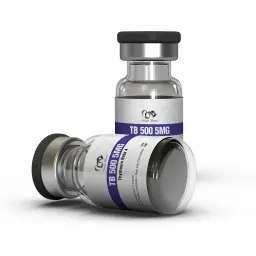
TB-500 5 mg by Zyvex Pharmaceuticals is supplied as a vial labeled with 5 mg of a Thymosin Beta-4-related peptide. TB-500 products are commonly marketed in regenerative and sports-recovery contexts because thymosin beta-4 biology is associated with actin regulation, cell migration, tissue remodeling, angiogenic signaling, and wound-healing research.
An important pharmacological distinction is necessary. Full-length Thymosin Beta-4 (Tβ4) and TB-500 are not necessarily identical substances. FDA's substance registry identifies TB-500 specifically as the N-terminal acetylated 17–23 fragment of thymosin beta-4, also described as N-acetyl-LKKTETQ. Therefore, a commercial product labeled simultaneously as "TB-500" and "Thymosin Beta-4" requires appropriate analytical characterization to establish which molecular species it actually contains.
Full-length thymosin beta-4 has undergone limited human clinical research, including intravenous and topical investigations. In contrast, FDA's 2026 review of TB-500 specifically reported that it did not identify published studies in which the TB-500 fragment itself had been administered to humans.
Neither TB-500 nor independently supplied injectable Thymosin Beta-4 products should be represented as FDA-approved treatments for tendon injuries, ligament injuries, muscle tears, wound healing, athletic recovery, or bodybuilding.
The 5 mg designation describes stated vial content. It does not establish a medically approved injection dose, administration frequency, or treatment course.
Thymosin beta-4 biology has generated scientific interest because of its relationship with actin, cell motility, tissue repair, vascular responses, and inflammatory signaling. Experimental programs involving full-length thymosin beta-4 have examined areas such as wound repair and cardiovascular tissue injury.
Potential research areas include:
These biological observations should not be extrapolated automatically to a commercial TB-500 vial. FDA's July 2026 scientific review emphasized that published human exposure data for the TB-500 fragment were not identified and that evidence supporting proposed wound-healing use was inadequate.
TB-500 is widely discussed outside conventional medicine for:
These remain investigational or non-medical applications. There is insufficient controlled human evidence demonstrating that TB-500 injections accelerate healing of sports-related tendon, ligament, or muscle injuries.
TB-500 is also not a direct anabolic agent. It does not activate androgen receptors in the manner of Testosterone, Trenbolone, Oxandrolone, or other anabolic-androgenic steroids.
Full-length Thymosin Beta-4 is a naturally occurring peptide strongly associated with regulation of actin dynamics. Actin is an essential structural protein involved in cellular architecture, movement, migration, and tissue-remodeling processes.
Thymosin beta-4 binds monomeric G-actin and contributes to regulation of actin polymerization. Experimental research has consequently linked thymosin beta-4 biology with:
TB-500, as characterized by FDA, is an acetylated seven-amino-acid fragment derived from residues 17–23 of thymosin beta-4. This region contains the LKKTET actin-binding sequence associated with important aspects of full-length thymosin beta-4 biology.
However, possessing a sequence derived from an active region does not demonstrate that the fragment reproduces all pharmacological actions of the complete 43-amino-acid thymosin beta-4 molecule. Full-length Tβ4 research therefore cannot automatically be treated as evidence for commercial TB-500.
The potential benefits associated with thymosin beta-4-related compounds are predominantly based on experimental regenerative biology rather than established therapeutic use of TB-500.
Areas of scientific interest include:
Claims that TB-500 reliably heals torn tendons, regenerates ligaments, repairs muscle injuries, dramatically increases flexibility, or accelerates return to sport are not supported by adequate controlled human clinical evidence.
Likewise, TB-500 should not be described as directly increasing muscle protein synthesis in the manner of an anabolic steroid. Any proposed recovery-related effects belong to regenerative and cell-migration research rather than classical androgen-mediated muscle anabolism.
TB-500 is frequently discussed alongside other investigational regenerative compounds. Such combinations are not validated treatment protocols.
The frequently discussed BPC-157 plus TB-500 combination has not been validated in controlled human trials as a standardized tendon- or ligament-healing protocol.
Combining several experimental peptides can also make it difficult to determine which compound is responsible for either an apparent benefit or an adverse event. It additionally increases uncertainty concerning sterility, identity, peptide purity, aggregation, and immune responses.
TB-500 has no established role in Hormone Replacement Therapy or Testosterone Replacement Therapy.
It does not:
TB-500 is therefore fundamentally different from Testosterone Enanthate, Testosterone Cypionate, Sustanon, or other androgen-replacement formulations.
Because it is non-androgenic, classical androgen-mediated suppression of the hypothalamic-pituitary-gonadal axis is not an expected primary pharmacological action. Nevertheless, the systemic safety profile of independently supplied injectable TB-500 remains inadequately characterized.
TB-500 by Zyvex Pharmaceuticals is labeled as containing 5 mg per vial. The vial strength identifies stated total product content only.
There is no FDA-approved human dosing regimen for injectable TB-500 for tendon repair, muscle injuries, ligament injuries, bodybuilding, athletic recovery, or general regenerative use.
Accordingly, the 5 mg vial should not automatically be interpreted as:
Published clinical investigations involving full-length thymosin beta-4 should also not be converted directly into dosing instructions for TB-500 because the two molecular entities are not necessarily equivalent.
For injectable peptide products, clinically relevant quality considerations include molecular identity, purity, peptide-related impurities, aggregation, sterility, bacterial endotoxin, particulate contamination, concentration accuracy, and stability after preparation.
FDA has specifically identified immunogenicity and peptide-related impurity concerns with TB-500-related compounded products and has stated that important human safety information is lacking.
TB-500 is not an androgen-receptor agonist and therefore is not expected to produce the classic virilization pattern associated with anabolic-androgenic steroids.
Androgen-related effects such as:
are not expected from the proposed thymosin-related mechanism itself.
However, the absence of androgenicity should not be confused with established safety. Human systemic exposure data for TB-500 remain inadequate, and reproductive, pregnancy, fetal-development, and breastfeeding safety have not been sufficiently established.
The 5 mg vial strength does not represent a validated female dose.
TB-500 does not primarily activate androgen receptors and does not function as an anabolic-androgenic steroid. Performance interest centers on proposed tissue-repair and recovery effects rather than direct androgen-mediated hypertrophy.
TB-500 5 mg by Zyvex Pharmaceuticals is supplied as a vial labeled with a thymosin beta-4-related active substance. TB-500 belongs to an investigational class of peptides associated with actin regulation, cell migration, wound remodeling, and regenerative research.
A key scientific distinction exists between full-length Thymosin Beta-4 and the TB-500 fragment. FDA identifies TB-500 as the acetylated 17–23 fragment of thymosin beta-4 and reported in its 2026 evaluation that published human administration studies of this specific fragment were not identified. Human studies involving full-length thymosin beta-4 therefore should not automatically be used to establish the clinical efficacy or safety of TB-500.
TB-500 is not an anabolic steroid, SARM, TRT product, or growth-hormone secretagogue. Claims concerning accelerated tendon, ligament, muscle, or wound healing remain insufficiently validated in controlled human trials. The 5 mg designation describes stated vial content rather than an approved dose or sports-recovery protocol.
TB-500 is the name commonly used for a thymosin beta-4-derived peptide. FDA specifically identifies TB-500 as the N-terminal acetylated 17–23 fragment of thymosin beta-4.
Research interest centers on thymosin-related mechanisms involving actin, cell migration, wound repair, angiogenesis, inflammatory regulation, and tissue remodeling.
There is insufficient controlled human clinical evidence to conclude that injectable TB-500 reliably accelerates tendon healing. Claims commonly made in sports-recovery marketing go beyond the currently established human evidence.
Ligament-repair claims remain experimental. FDA's recent review found inadequate evidence supporting human therapeutic use of the TB-500 fragment for wound-healing applications.
TB-500 is not a direct androgenic muscle-building drug. Proposed benefits relate primarily to regenerative and cell-migration pathways rather than classical anabolic-steroid signaling.
The combination is frequently discussed in regenerative-peptide communities, but there is no standardized, validated human clinical protocol establishing that a TB-500/BPC-157 combination improves tendon, ligament, or muscle healing.
Please log in to write TB-500 review.

Human Peptide Hormone
Active Ingredient: Thymosin Beta 4
Concentration: 2 mg / vial
Price For: 5 mL Vial
Brand: Generic Peptides

Human Peptide Hormone
Active Ingredient: Thymosin Beta 4
Concentration: 10 mg / vial
Price For: 5 mL Vial
Brand: Generic Peptides

Human Peptide Hormone
Active Ingredient: Thymosin Beta 4
Concentration: 5 mg / vial
Price For: 5 mL Vial
Brand: Generic Peptides
Peptide Hormone
Active Ingredient: Thymosin Beta-4
Concentration: 5 mg / vial
Price For: 2 mL Vial
Brand: Dragon Pharma