Product Overview
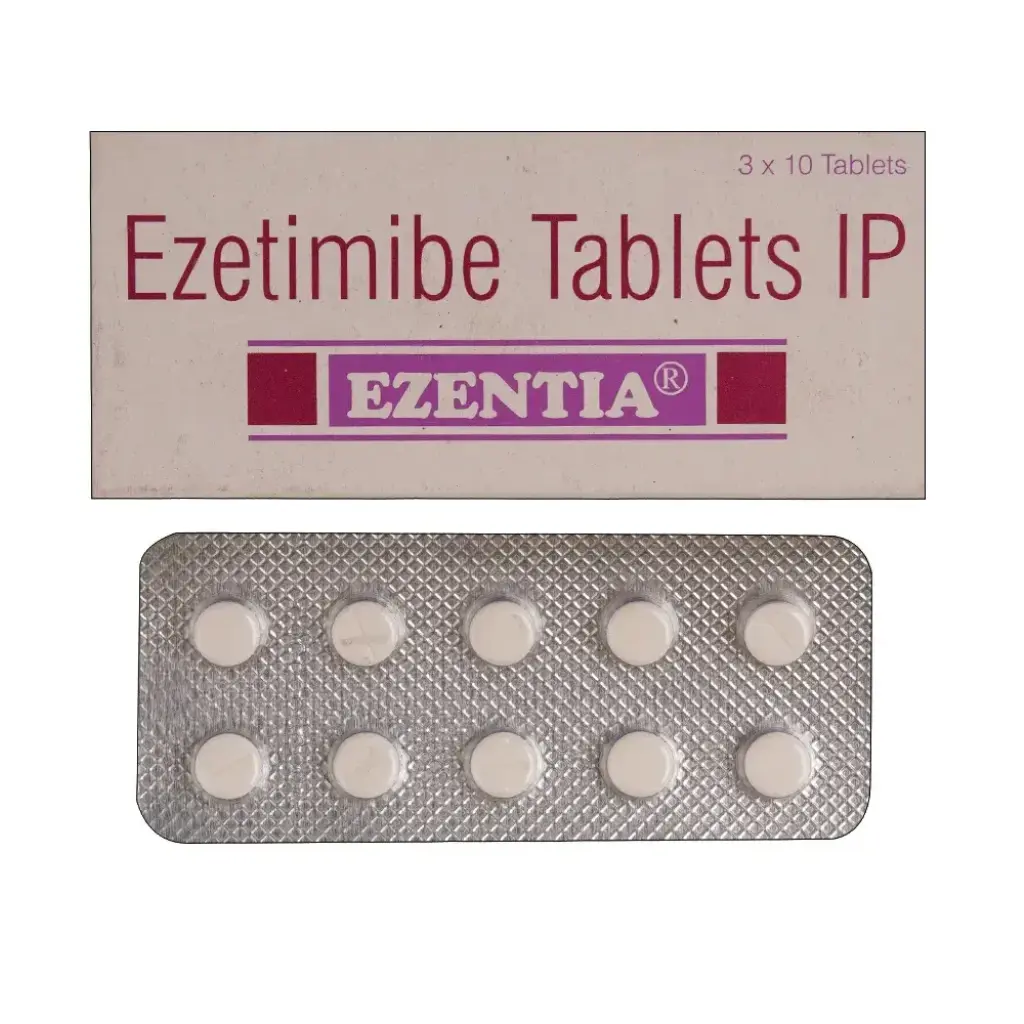
Ezentia 10 mg contains ezetimibe, a cholesterol-lowering medication that works by reducing the absorption of cholesterol in the intestine. It is manufactured by Sun Pharma Laboratories and supplied in packs of 30 tablets.
Ezetimibe is often used alone or in combination with statins to improve lipid profiles and reduce cardiovascular risk.
Drug Class
Ezentia belongs to the lipid-lowering agents, specifically cholesterol absorption inhibitors.
Indications
Primary Uses
- Hypercholesterolemia (high cholesterol levels)
- Prevention of cardiovascular disease
Combination Therapy
- Used with statins when additional LDL reduction is needed
- Alternative for patients intolerant to statins
Mechanism of Action
Ezetimibe works by:
- Blocking cholesterol absorption in the small intestine
- Reducing the amount of cholesterol delivered to the liver
- Increasing clearance of LDL cholesterol from the blood
This leads to a significant reduction in LDL ("bad") cholesterol levels.
Dosage & Administration
- Typical dose: 10 mg once daily
It can be taken with or without food and is often used alongside dietary modifications.
Best Time to Take
Ezentia can be taken at any time of the day. Consistency is more important than timing, so it should be taken at the same time daily.
HRT/TRT Relevance
Ezetimibe may be relevant in patients undergoing hormone replacement therapy (HRT) or testosterone replacement therapy (TRT), as these therapies can affect lipid profiles.
Use in Females
Ezentia is safe for use in females for cholesterol management. However, it should be used cautiously during pregnancy and breastfeeding under medical supervision.
Pre-Treatment Assessment
- Lipid profile evaluation
- Liver function tests (especially if combined with statins)
- Assessment of cardiovascular risk
Comparative Analysis
Ezetimibe vs Statins
- Ezetimibe: Reduces cholesterol absorption
- Statins: Reduce cholesterol production in the liver
Combination Therapy Benefits
- Greater LDL reduction
- Lower statin dose required
- Improved cardiovascular outcomes
Effectiveness
Ezentia effectively lowers LDL cholesterol by approximately 15–25% when used alone and more when combined with statins.
Risk Management
Common Side Effects
- Headache
- Diarrhea
- Fatigue
Serious Side Effects
- Liver enzyme elevation (especially with statins)
- Muscle pain (rare)
- Allergic reactions
Can Ezetimibe Damage Kidneys?
Ezetimibe is generally safe for the kidneys and is not known to cause direct kidney damage in most patients.
Mitigation Strategies
- Regular monitoring when combined with statins
- Report unusual muscle pain or weakness
- Follow prescribed dosage
What Are the Bad Side Effects?
Serious side effects are rare but may include liver issues or muscle-related symptoms, particularly when used with statins.
Three Common Side Effects
- Headache
- Diarrhea
- Fatigue
Drug Interactions
- Statins: Increased risk of liver-related side effects
- Fibrates: May increase risk of gallstones
- Bile acid sequestrants: May reduce ezetimibe absorption
Sourcing & Selection
When selecting Ezentia, consider:
- Trusted manufacturers like Sun Pharma
- Correct dosage (10 mg)
- Proper packaging and storage
Conclusion
Ezentia 10 mg is an effective and well-tolerated cholesterol-lowering medication. Its unique mechanism makes it a valuable option either alone or in combination with statins for comprehensive lipid management.
Ezentia 10 mg FAQ
What are the bad side effects of ezetimibe?
Rare but serious side effects include liver issues and muscle pain, especially when combined with statins.
Can ezetimibe damage kidneys?
No, it is generally safe for kidney function.
What is the best time of day to take ezetimibe 10 mg?
It can be taken at any time, but consistency is important.
What are three common side effects?
Headache, diarrhea, and fatigue are the most commonly reported.