



Product Class: Investigational Synthetic Peptide
Active Ingredient: Body Protective Compound 157 (BPC-157)
Concentration: 5 mg per vial
Price For: 1 vial
Brand: BPC 157
BPC 157 5 mg by Zyvex Pharmaceuticals contains Body Protective Compound 157 (BPC-157), a synthetic peptide composed of 15 amino acids. BPC-157 has attracted substantial research interest because preclinical experiments have reported effects involving tissue repair, gastrointestinal protection, angiogenic signaling, tendon and ligament healing, and inflammatory responses.
BPC-157 is commonly promoted within sports, rehabilitation, and peptide communities as a recovery peptide. However, this description should not be confused with established clinical efficacy. Most published evidence comes from laboratory and animal research, while robust human clinical evidence remains very limited. BPC-157 is not an approved medicine for treating tendon injuries, muscle tears, gastrointestinal disease, postoperative recovery, or sports injuries.
The 5 mg vial represents the total quantity of peptide supplied and does not establish an approved therapeutic dose. Because injectable BPC-157 products are generally supplied outside conventional approved pharmaceutical pathways, product identity, purity, sterility, and manufacturing quality are important considerations.
BPC-157 has primarily been evaluated in experimental models rather than established clinical practice. Areas investigated in preclinical research include:
Positive findings in animal models do not establish that the same effects occur in humans. Controlled human trials are necessary to determine effective indications, appropriate exposure, contraindications, and long-term safety.
Within bodybuilding, fitness, and sports-rehabilitation communities, BPC-157 is frequently discussed in relation to:
These applications remain experimental. BPC-157 should not be presented as a proven treatment for sports injuries or as an alternative to accurate diagnosis, rehabilitation, physiotherapy, or surgical management when clinically required.
The precise mechanism of BPC-157 in humans has not been established. Preclinical research suggests that the peptide may interact with several biological systems involved in tissue repair rather than acting through a single well-defined receptor.
Experimental mechanisms under investigation include:
These proposed mechanisms are largely based on animal and laboratory studies. The extent to which they translate into clinically meaningful effects in humans remains uncertain.
BPC-157 does not activate androgen receptors and is not an anabolic steroid. It also does not function as testosterone, growth hormone, or IGF-1.
Preclinical research has generated interest in several potential applications of BPC-157, including:
These should be described as potential research effects rather than established human benefits. Evidence is currently insufficient to conclude that BPC-157 reliably accelerates injury healing or improves athletic recovery in humans.
BPC-157 is frequently discussed alongside other experimental peptides and established rehabilitation strategies. However, there are no clinically validated BPC-157 "stacks," and combining investigational compounds can make effectiveness and adverse effects more difficult to evaluate.
Physical rehabilitation, progressive loading, adequate protein and energy intake, sleep, and accurate diagnosis remain more established components of musculoskeletal recovery than experimental peptide combinations.
BPC-157 has no established role in Testosterone Replacement Therapy (TRT) or conventional Hormone Replacement Therapy (HRT). It does not replace testosterone, increase luteinizing hormone, restore endogenous testosterone production, or function as an estrogen-management medication.
BPC-157 is sometimes discussed by individuals receiving TRT because of claims surrounding musculoskeletal recovery. This does not make it a component of testosterone replacement therapy, and there is insufficient evidence that adding BPC-157 improves TRT outcomes.
Musculoskeletal symptoms occurring during TRT should be evaluated according to their underlying cause rather than automatically treated with an investigational peptide.
There is no regulator-approved human dosing regimen for BPC-157. The substance remains investigational, and dosing schedules promoted through bodybuilding forums, peptide vendors, or social media have not been established as safe and effective through robust clinical trials.
This product contains 5 mg per vial. The vial content describes the quantity supplied and should not be interpreted as an appropriate single dose, daily dose, or treatment course.
Published animal doses should not be converted directly into human doses. Differences in species, metabolism, administration route, formulation, and biological response make direct extrapolation unreliable.
Similarly, claims that BPC-157 should be injected directly beside an injured tendon, ligament, muscle, or joint are not supported by established clinical dosing standards. Injecting unapproved products around injured anatomical structures introduces additional risks and should not substitute for professional assessment.
Any legitimate investigational use should occur under an appropriately designed clinical or research protocol with verified product identity, sterility, concentration, and medical oversight.
BPC-157 is not an androgen and therefore is not expected to produce the virilizing effects associated with anabolic steroids, such as androgen-mediated voice deepening or increased facial hair.
However, absence of androgenicity does not establish reproductive safety. Human data regarding fertility, pregnancy, fetal development, and breastfeeding are inadequate.
Women who are pregnant, breastfeeding, attempting conception, or undergoing fertility treatment should avoid experimental peptide use unless it is part of appropriately authorized clinical research overseen by qualified healthcare professionals.
BPC 157 5 mg by Zyvex Pharmaceuticals is an investigational synthetic peptide supplied as a 5 mg vial. BPC-157 has attracted substantial research interest because preclinical studies have explored its potential effects on tendon, ligament, muscle, gastrointestinal, vascular, and other tissue-repair pathways.
The distinction between experimental findings and demonstrated human treatment is essential. BPC-157 currently lacks the level of controlled human evidence required to establish standard therapeutic indications, validated dosing protocols, or long-term safety. It should therefore be characterized as a research peptide rather than a clinically proven injury-healing medication, and claims concerning accelerated recovery or tissue regeneration should be interpreted cautiously.
BPC-157 is a synthetic 15-amino-acid peptide investigated primarily in animal and laboratory research involving tissue repair, gastrointestinal protection, vascular signaling, and musculoskeletal healing.
BPC-157 is commonly discussed for tendon, ligament, muscle, and gastrointestinal recovery. However, these applications remain experimental because high-quality human clinical evidence is limited.
Animal studies have reported potentially favorable effects on tendon-healing processes. This does not establish that BPC-157 reliably heals tendon injuries in humans, and controlled clinical evidence remains insufficient.
BPC-157 is not an anabolic steroid and does not directly activate androgen receptors. It is primarily researched for tissue-repair pathways rather than direct skeletal-muscle hypertrophy.
Athletes subject to anti-doping rules should treat BPC-157 as prohibited. Its investigational status and anti-doping classification make it inappropriate for athletes competing under applicable World Anti-Doping Agency regulations.
Please log in to write BPC 157 5 mg review.
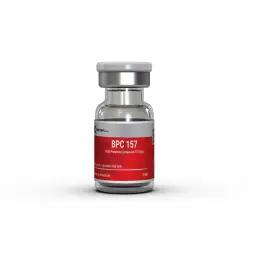
Product Class: Investigational Regenerative Peptide
Active Ingredient: BPC-157 (Body Protection Compound-157)
Concentration: 5 mg/vial
Price For: 1 vial
Brand: BPC-157
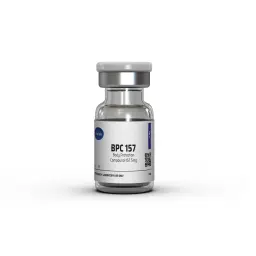
Product Class: Investigational Regenerative Peptide
Active Ingredient: BPC-157 (Body Protection Compound-157)
Concentration: 5 mg/vial
Price For: 1 vial
Brand: BPC-157
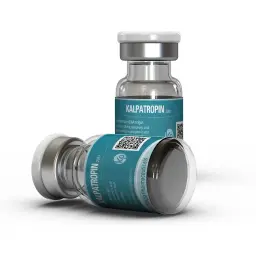
Growth Hormone Analog
Active Ingredient: Somatropin (r-hGH)
Concentration: 20 IU / vial
Price For: 1 kit [10 x Vials]
Brand: Kalpa Pharmaceuticals
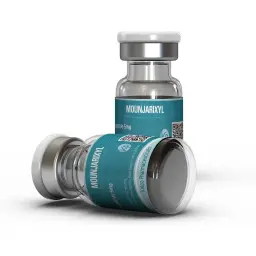
Human Peptide Hormone
Active Ingredient: Tirzepatide
Concentration: 5 mg / vial
Price For: 2 mL Vial
Brand: Kalpa Pharmaceuticals