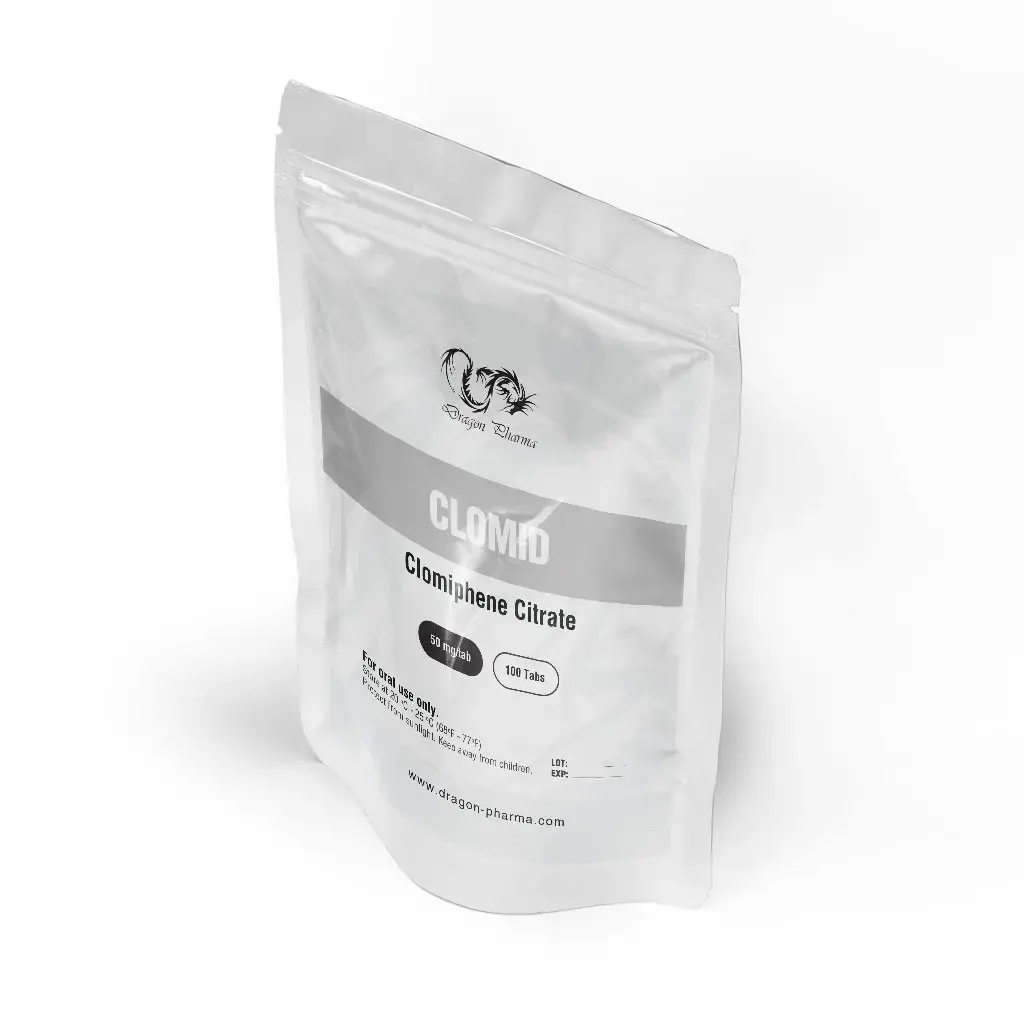
Original Clomid by Dragon Pharma
Product Overview
Clomid 50 mg contains clomiphene citrate, a well-established selective estrogen receptor modulator (SERM) used in fertility treatment and hormonal recovery protocols. It is widely prescribed to induce ovulation in women and restore natural testosterone production in men.
Manufactured by Dragon Pharma, Clomid is a cornerstone therapy in both clinical endocrinology and performance-based hormone management.
Drug Class
Clomiphene belongs to the class of SERMs, which selectively block estrogen receptors in certain tissues while maintaining estrogen activity in others.
Indications
Clinical Uses
- Ovulation induction in women with infertility
- Polycystic ovary syndrome (PCOS)-related infertility
- Male hypogonadism (off-label)
Performance Uses
- Post Cycle Therapy (PCT)
- Restoration of endogenous testosterone production
Mechanism of Action
Clomiphene works by modulating estrogen receptors:
- Blocks estrogen receptors in the hypothalamus
- Increases release of GnRH
- Stimulates LH and FSH production
- Enhances ovulation (in females) and testosterone production (in males)
Hypertrophy Protocols
Clomid is not used for hypertrophy but plays a critical role in recovery after anabolic steroid use.
Pharmacokinetics
- Half-life: 5–7 days (long-acting metabolites)
- Oral bioavailability
- Hepatic metabolism
Effects & Benefits
- Induces ovulation in women
- Restores testosterone production in men
- Supports hormonal balance
- Improves fertility outcomes
Synergy & Stacking
Clomid is commonly combined with other agents depending on therapeutic goals:
- Tamoxifen (Nolvadex): Combined in PCT protocols
- hCG (Human Chorionic Gonadotropin): Stimulates testicular function
- Aromatase inhibitors (Arimidex/Aromasin): Controls estrogen levels
Combination protocols are often used for optimal hormonal recovery.
HRT/TRT Relevance
Clomid is used in TRT alternatives or fertility-preserving protocols to stimulate natural testosterone production.
Use in Females
Clomid is widely used in women for ovulation induction:
- Typical dosing: 50–100 mg daily for 5 days per cycle
- Initiated early in menstrual cycle (day 2–5)
Pre-Treatment Assessment
- Hormonal panel (LH, FSH, estrogen, testosterone)
- Ovulatory status assessment
- Reproductive health evaluation
Effectiveness
Clomid is highly effective for inducing ovulation and restoring hormonal function, with well-documented clinical outcomes.
Risk Management
Common Side Effects
- Hot flashes
- Mood swings
- Headaches
Less Common Effects
- Visual disturbances
- Nausea
Serious Side Effects
- Ovarian hyperstimulation syndrome (rare)
- Thromboembolic events (rare)
Mitigation Strategies
- Use under supervision
- Monitor hormonal response
- Avoid prolonged use without evaluation
Post Cycle Therapy (PCT)
In performance use, Clomid is a key component of PCT to restore natural testosterone production.
What to Avoid While Using Clomid
- Excessive dosing
- Prolonged unsupervised use
- Ignoring side effects
Drug Interactions
- Hormonal therapies
- Estrogen-containing medications
Conclusion
Clomid 50 mg (Clomiphene Citrate) is a highly effective SERM used for fertility treatment and hormonal recovery. Its dual role in clinical and performance settings makes it an essential compound in endocrine management.
Clomid FAQ
What happens after taking Clomid for 5 days?
Ovulation is typically induced within 5–10 days after completion.
How to use Clomid tablet for pregnancy?
It is taken early in the menstrual cycle for 5 days to stimulate ovulation.
Can I get pregnant one month after taking Clomid?
Yes, pregnancy can occur within the first treatment cycle.