


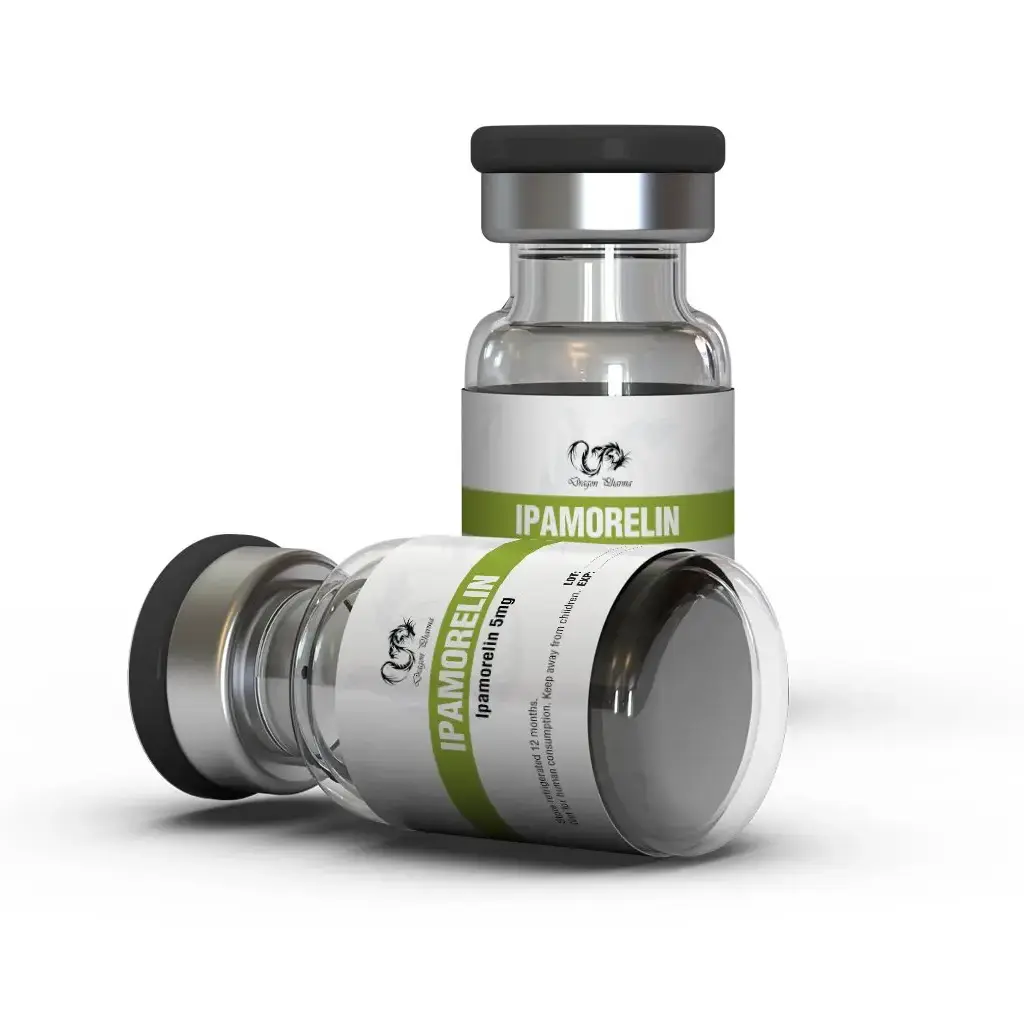
Product Class: Growth Hormone Secretagogue Peptide
Active Ingredient: Ipamorelin
Concentration: 5 mg per vial
Price For: 1 vial
Brand: Ipamorelin
Ipamorelin 5 mg contains Ipamorelin, a synthetic pentapeptide classified as a selective growth hormone secretagogue. Manufactured by Dragon Pharma, each vial contains 5 mg of the peptide for research-oriented use.
Ipamorelin activates the growth hormone secretagogue receptor, also known as the ghrelin receptor or GHS-R1a, and stimulates the pituitary gland to release endogenous growth hormone. Early pharmacology research characterized Ipamorelin as relatively selective for growth hormone release, with substantially less stimulation of adrenocorticotropic hormone and cortisol than several older growth hormone-releasing peptides in experimental models.
Ipamorelin has been evaluated experimentally in healthy volunteers and in clinical research involving postoperative gastrointestinal recovery. It has not become an approved treatment for muscle growth, fat loss, anti-aging, athletic recovery, or routine growth hormone replacement.
Ipamorelin has been studied as a pharmacological tool for stimulating pulsatile growth hormone release. Human pharmacokinetic and pharmacodynamic research demonstrated a dose-related growth hormone response after intravenous administration to healthy volunteers.
Clinical development also included Phase II research investigating whether Ipamorelin could accelerate recovery of gastrointestinal function after bowel surgery. These studies did not establish Ipamorelin as an approved general-purpose peptide therapy.
Within bodybuilding, fitness, and peptide communities, Ipamorelin is commonly discussed in relation to:
These uses are not approved medical indications. Evidence supporting meaningful improvements in muscle growth, fat loss, sleep quality, injury healing, or longevity remains limited, particularly for commercially supplied research products.
Ipamorelin binds to the growth hormone secretagogue receptor GHS-R1a. Activation of this receptor stimulates signaling within the hypothalamic-pituitary axis and promotes a pulse of growth hormone release from the anterior pituitary.
Growth hormone can subsequently influence hepatic and peripheral production of insulin-like growth factor 1, commonly abbreviated as IGF-1. The GH–IGF-1 axis contributes to:
Ipamorelin does not directly provide recombinant growth hormone. It also does not bind to androgen receptors, replace testosterone, or function as an anabolic steroid.
Ipamorelin produces a relatively short-lived exposure followed by a measurable growth hormone response. In a human dose-escalation study, researchers evaluated both circulating Ipamorelin concentrations and the resulting growth hormone secretion in healthy male volunteers.
Product-specific absorption, purity, sterility, and biological activity cannot be inferred solely from the label of a non-approved commercial peptide.
Potential applications discussed in research and peptide communities include:
These proposed benefits should be distinguished from proven clinical outcomes. A review of growth hormone secretagogues concluded that the class may have therapeutic potential, but also emphasized the limited number of rigorous, long-term controlled safety and efficacy studies.
Within peptide research discussions, Ipamorelin is frequently referenced alongside agents that affect complementary parts of the growth hormone axis.
Combining investigational peptides does not guarantee greater effectiveness. It may complicate glucose regulation, fluid balance, IGF-1 interpretation, product attribution, and adverse-effect monitoring. No standardized or approved Ipamorelin stacking protocol exists.
Ipamorelin is not a testosterone replacement therapy medication. It does not replace testosterone, increase luteinizing hormone, restore spermatogenesis, or prevent the endocrine suppression caused by anabolic steroids.
Ipamorelin is also not an approved substitute for medically prescribed recombinant growth hormone. Suspected growth hormone deficiency requires specialist endocrine testing because random GH measurements are difficult to interpret and formal stimulation testing may be necessary.
Individuals receiving TRT should not assume that adding Ipamorelin will improve testosterone effectiveness, fertility, body composition, or recovery. Any evaluation of the GH–IGF-1 axis should be based on symptoms, medical history, glucose status, IGF-1 testing, and specialist assessment.
Ipamorelin is an investigational peptide, and there is no universally accepted or regulator-approved dosing schedule for bodybuilding, anti-aging, fat loss, sleep improvement, or general wellness.
Published human research used controlled clinical protocols with defined routes of administration, dose escalation, participant screening, and medical observation. Those experimental methods should not be converted directly into self-treatment instructions for a commercially supplied 5 mg vial.
Any medically supervised research use should be individualized according to:
Reconstitution volume, final concentration, administration route, injection frequency, and treatment duration must follow a validated protocol established by a qualified professional. Users should not estimate injection volume without confirming the amount of peptide in the vial, the volume and type of diluent, and the resulting concentration.
Peptide products should never be used when the vial is damaged, unlabeled, expired, visibly contaminated, or supplied without credible sterility and identity documentation.
Ipamorelin is not androgenic and is not expected to cause the virilizing effects associated with testosterone or anabolic steroids. However, this does not establish safety in women.
Long-term reproductive data are limited. Use should be avoided during pregnancy, while attempting conception, and during breastfeeding unless part of an authorized clinical study. Women with polycystic ovary syndrome, impaired glucose tolerance, active malignancy, pituitary disease, or unexplained endocrine symptoms require medical assessment before considering any GH-axis compound.
A medically responsible baseline assessment may include:
Growth hormone signaling can influence glucose metabolism, tissue growth, fluid balance, and symptoms of sleep-disordered breathing. Baseline evaluation helps determine whether additional endocrine investigation is appropriate.
Ipamorelin 5 mg is a synthetic growth hormone secretagogue that activates GHS-R1a and stimulates pulsatile endogenous GH release. Early research identified Ipamorelin as comparatively selective for growth hormone secretion, and human studies confirmed measurable pharmacodynamic activity.
Despite widespread discussion in recovery, body-composition, and healthy-aging communities, Ipamorelin remains investigational. It is not approved as a bodybuilding peptide, TRT adjunct, anti-aging therapy, or substitute for prescribed growth hormone. Product quality, endocrine monitoring, glucose status, sports eligibility, and the absence of robust long-term clinical data are important considerations when evaluating this peptide.
Ipamorelin is a research growth hormone secretagogue studied for its ability to stimulate endogenous GH release. It has also been investigated experimentally in postoperative gastrointestinal recovery, but it is not approved for bodybuilding, anti-aging, fat loss, or routine hormone therapy.
Yes. Human pharmacology research demonstrated that Ipamorelin can produce a measurable, dose-related growth hormone response.
Growth hormone can stimulate IGF-1 production, but the degree of change depends on dose, duration, liver function, nutrition, age, and baseline endocrine status. IGF-1 should be measured rather than assumed.
Ipamorelin does not directly stimulate the hypothalamic-pituitary-gonadal axis and should not be expected to raise testosterone or restore fertility
Please log in to write Ipamorelin review.
Human Peptide Hormone
Active Ingredient: Ipamorelin
Concentration: 5 mg / vial
Price For: 5 mL Vial
Brand: Generic Peptides
Product Class: Growth Hormone Secretagogue Peptide Blend (GHRH + GHRP)
Active Substance: Tesamorelin + Ipamorelin
Concentration: 10 mg/vial
Price For: 1 vial
Brand: Peptide Blend
Human Peptide Hormone
Active Ingredient: Ipamorelin
Concentration: 2 mg / vial
Price For: 5 mL Vial
Brand: Generic Peptides
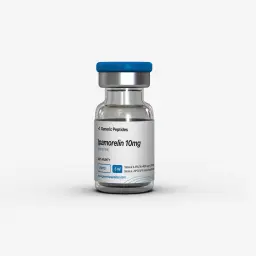
Human Peptide Hormone
Active Ingredient: Ipamorelin
Concentration: 10 mg / vial
Price For: 5 mL Vial
Brand: Generic Peptides