


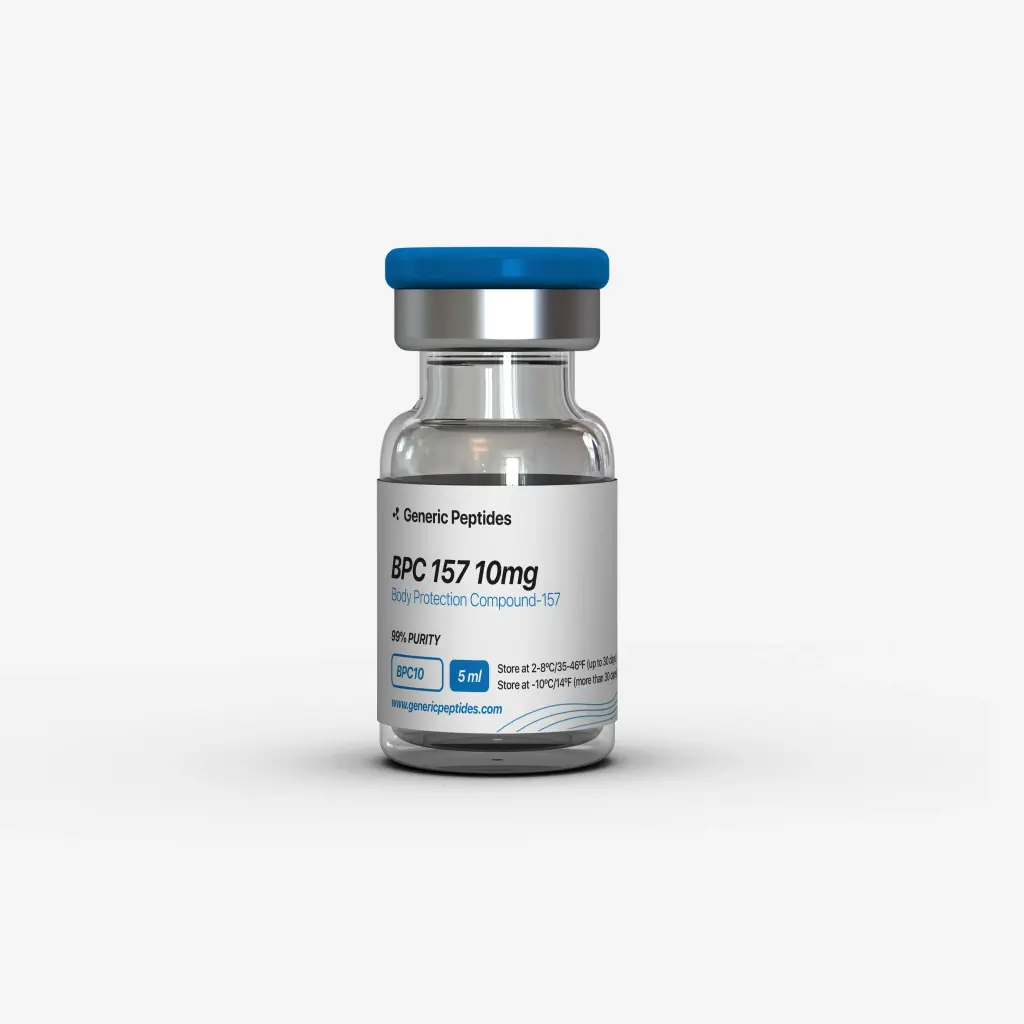
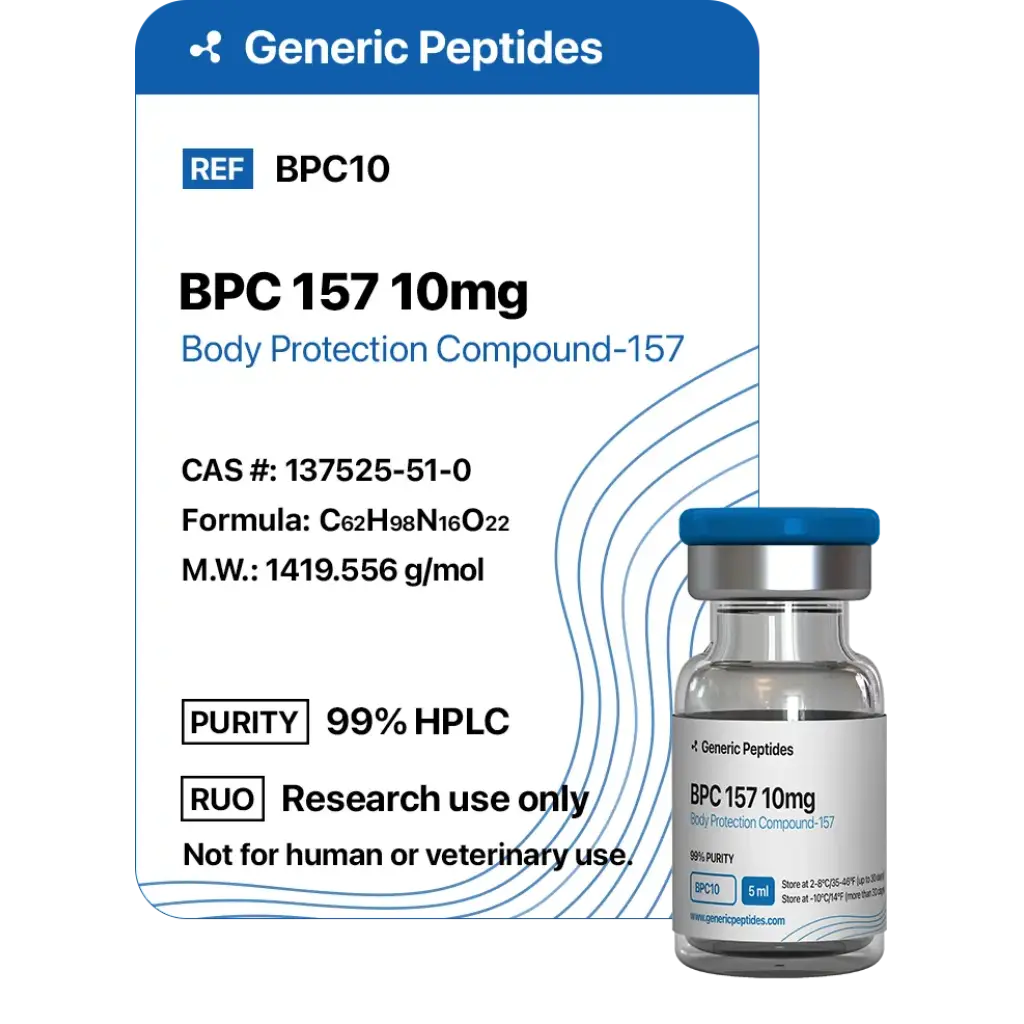
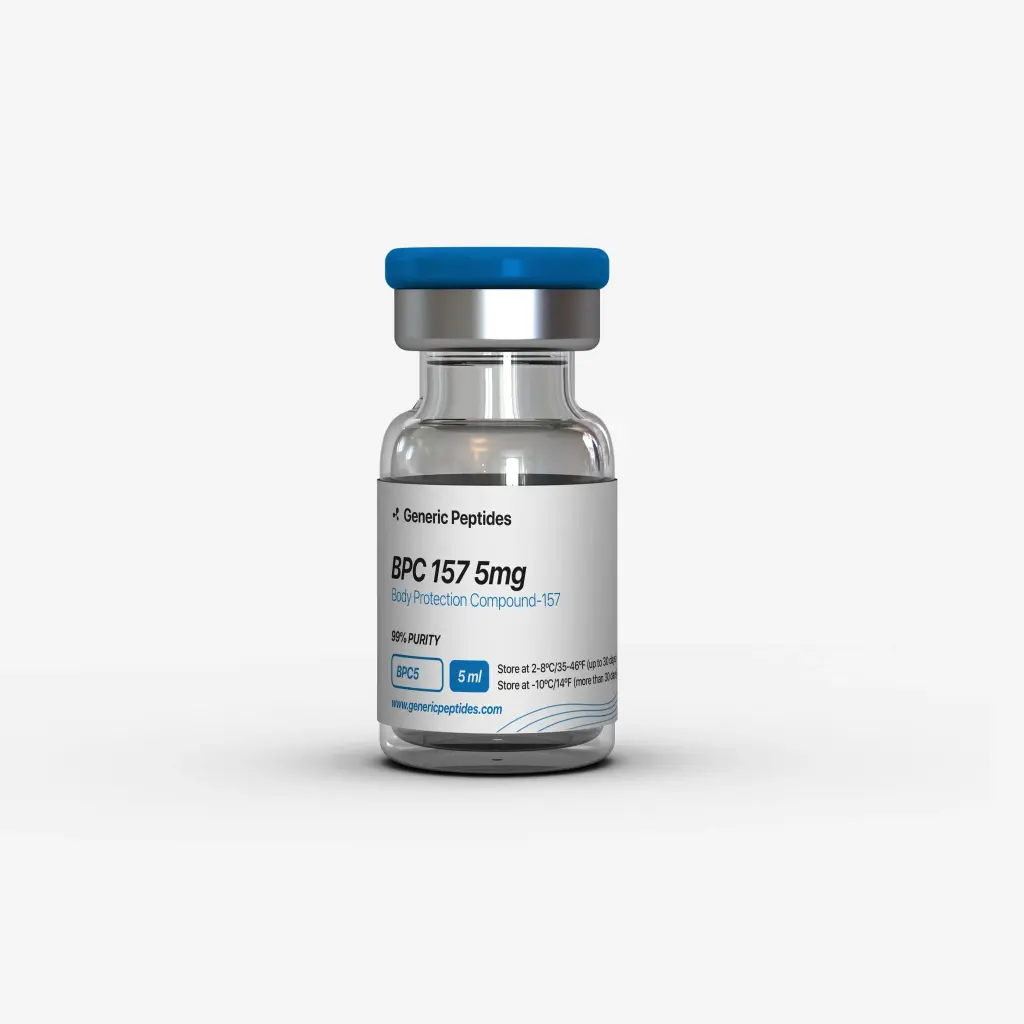
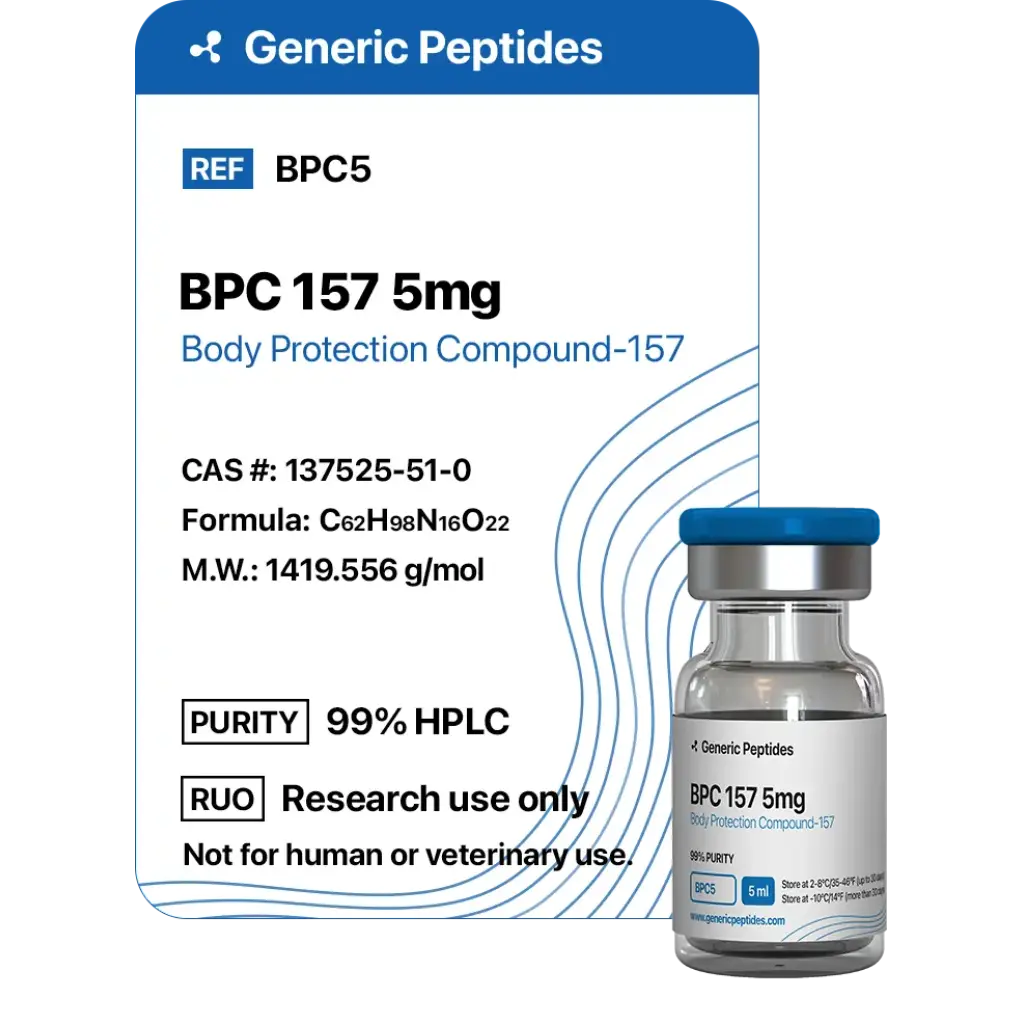
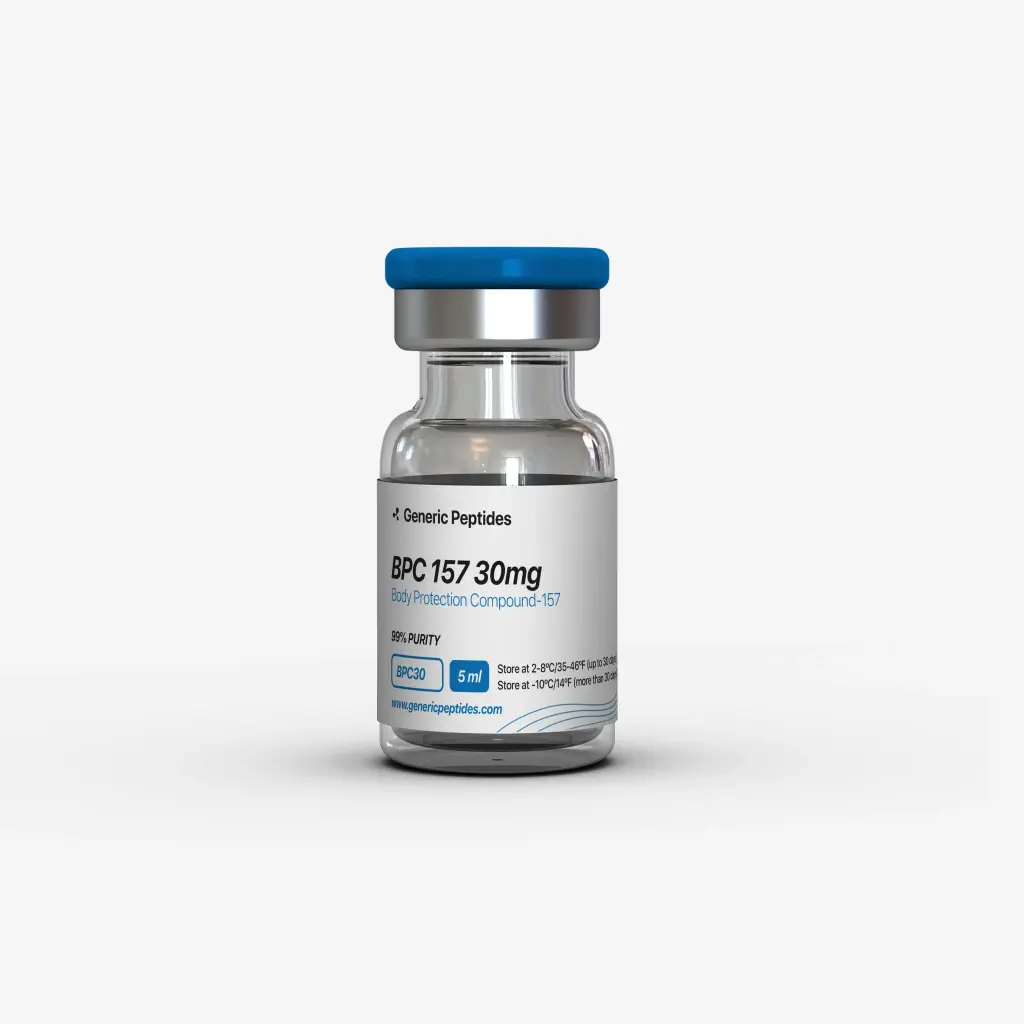
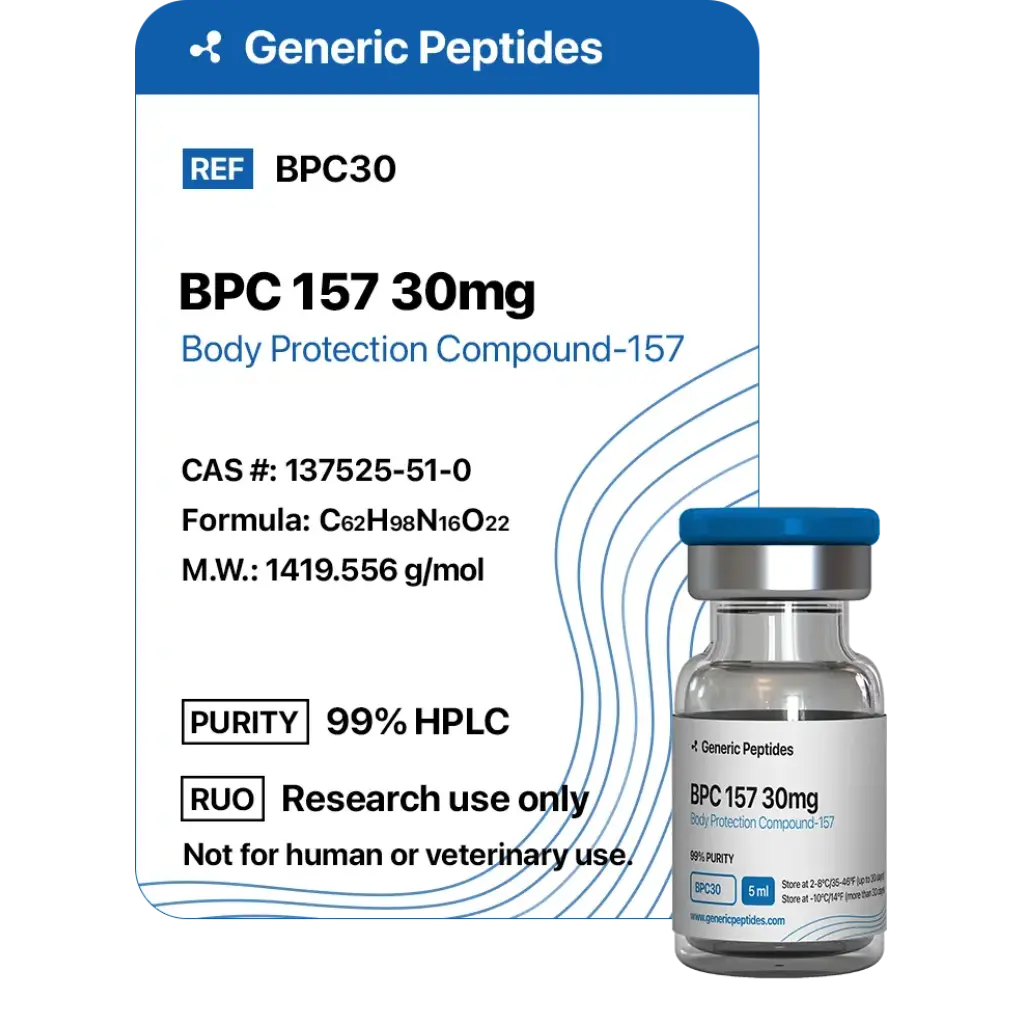
Product Class: Investigational Regenerative / Research Peptide
Active Ingredient: BPC-157 Pentadecapeptide
Concentration: 5 mg / 10 mg / 30 mg per vial
Price For: 1 vial
Brand: BPC 157
BPC-157 5 mg / 10 mg / 30 mg by Generic Peptides contains BPC-157 Pentadecapeptide in three stated vial strengths: 5 mg, 10 mg, or 30 mg. BPC-157 is a synthetic 15-amino-acid peptide investigated primarily in experimental and preclinical models involving tissue repair, gastrointestinal protection, vascular responses, inflammatory signaling, and musculoskeletal recovery.
BPC-157 is best classified as an investigational research peptide, not an established regenerative medicine. It has become widely discussed in sports, bodybuilding, rehabilitation, and peptide communities for tendon, ligament, muscle, joint, and gastrointestinal recovery.
The 5 mg, 10 mg, and 30 mg labels indicate the stated quantity of peptide contained in each vial. A higher vial content does not demonstrate greater clinical effectiveness or establish an appropriate human dose.
BPC-157 does not have an established routine therapeutic indication comparable with an approved prescription medication. Research interest has focused on tissue-repair biology and gastrointestinal protection, but available human evidence is insufficient to establish BPC-157 as a standard treatment for tendon injuries, ligament damage, muscle tears, arthritis, inflammatory bowel disease, ulcers, postoperative recovery, or chronic musculoskeletal pain.
Consequently, claims that BPC-157 is clinically proven to "heal" injuries should be interpreted cautiously. Positive findings in animal models provide a rationale for additional research but cannot establish efficacy, optimal dosing, or long-term safety in humans.
Within sports, bodybuilding, and injury-recovery communities, BPC-157 is commonly discussed for:
These applications remain experimental. Anecdotal improvement cannot reliably distinguish a pharmacological effect from natural healing, rehabilitation, reduced training load, placebo effects, or concurrent therapies.
The precise mechanism of BPC-157 in humans has not been established. Most mechanistic information comes from preclinical studies.
Experimental research has suggested possible interactions with:
These findings have generated interest in BPC-157 for connective-tissue and gastrointestinal research. However, a plausible biological mechanism is not equivalent to demonstrated clinical effectiveness.
BPC-157 is pharmacologically distinct from anabolic steroids, testosterone, SARMs, and growth hormone secretagogues. It is not an androgen receptor agonist and is not primarily designed to stimulate pituitary growth hormone release.
Potential benefits attributed to BPC-157 should be described as experimental or preclinical. Research interest includes:
Animal and laboratory findings cannot establish that comparable outcomes occur in humans. Human tissue injury is also heterogeneous: tendon rupture, tendinopathy, ligament tears, muscle strains, cartilage injury, and inflammatory joint disorders require different diagnostic and rehabilitation approaches.
BPC-157 should therefore not be regarded as a substitute for appropriate imaging, physical rehabilitation, load management, or specialist assessment when a significant injury is suspected.
BPC-157 is frequently discussed alongside other peptides and recovery compounds. These combinations remain experimental and should not be interpreted as validated medical protocols.
Combining multiple experimental compounds can increase uncertainty and make it difficult to determine which compound is responsible for either an apparent benefit or an adverse reaction.
BPC-157 has no established role in Hormone Replacement Therapy (HRT) or Testosterone Replacement Therapy (TRT).
It does not provide testosterone, does not function as a conventional androgen receptor agonist, and cannot replace the physiological endocrine functions of testosterone.
For appropriately diagnosed male hypogonadism, established testosterone formulations such as Testosterone Enanthate, Testosterone Cypionate, or other approved testosterone products belong to a fundamentally different pharmacological category.
BPC-157 also should not be considered an established post-cycle therapy. There is insufficient evidence that it restores LH, FSH, endogenous testosterone production, or fertility following anabolic-steroid-induced hypothalamic-pituitary-gonadal suppression.
There is no regulator-approved human dosing regimen for BPC-157 for injury healing, bodybuilding recovery, gastrointestinal treatment, or general regenerative use.
The available product strengths are:
These quantities describe vial content only. They do not represent recommended single doses, daily doses, injection schedules, treatment durations, or cycles.
The 10 mg vial contains twice the stated peptide quantity of the 5 mg vial, while the 30 mg vial contains six times the stated quantity of the 5 mg vial. This difference in total content does not mean that a higher amount should be administered or that the larger vial is clinically more effective.
Human evidence remains inadequate to establish an optimal dose, route of administration, treatment frequency, maximum exposure, or long-term safety profile.
With non-approved injectable peptides, additional uncertainty can involve identity, concentration accuracy, sterility, endotoxin contamination, peptide aggregation, degradation products, and other manufacturing-related variables. Administration schedules circulated through forums or social media should therefore not be treated as clinically validated dosing protocols.
BPC-157 is not an anabolic-androgenic steroid and is not expected to produce classic androgen-mediated virilization in the manner associated with testosterone, Drostanolone, Oxandrolone, or other anabolic steroids.
However, absence of conventional androgenic activity does not establish safety for women. Human reproductive, pregnancy, fetal-development, and breastfeeding data are inadequate.
There is also no validated female-specific performance or injury-recovery dose. Use during pregnancy, attempts to conceive, or breastfeeding should not be assumed safe on the basis of its peptide classification.
BPC-157 5 mg / 10 mg / 30 mg by Generic Peptides provides the investigational pentadecapeptide BPC-157 in three vial sizes. BPC-157 has generated substantial research interest for tissue repair, connective-tissue recovery, gastrointestinal protection, angiogenesis, and inflammatory signaling, but most supporting evidence remains preclinical.
The three versions differ primarily in the total stated peptide content per vial. A larger vial does not establish greater clinical effectiveness or an appropriate human dose. Until adequate controlled human trials establish efficacy, dosing, and safety, BPC-157 should be described as an experimental research peptide rather than a clinically proven regenerative treatment.
These products contain the same stated BPC-157 Pentadecapeptide in different vial quantities: 5 mg, 10 mg, or 30 mg. The difference is total peptide content rather than a different active compound.
BPC-157 is investigated for potential effects involving tissue repair, gastrointestinal protection, vascular responses, and inflammatory pathways. It is widely discussed for tendon, ligament, muscle, and joint recovery, but these are not established approved therapeutic indications.
No. BPC-157 is pharmacologically different from growth hormone secretagogues such as Ipamorelin and from growth hormone-releasing hormone analogues such as CJC-1295.
The numbers indicate total peptide content per vial rather than pharmacological "strength" in the sense of greater potency. A 30 mg vial contains more total BPC-157 than a 5 mg or 10 mg vial, but this does not establish that a larger human dose is appropriate or more effective.
Please log in to write BPC-157 review.
Product Class: Regenerative Peptide / Cytoprotective Agent
Active Substance: BPC-157 Pentadecapeptide
Concentration: 5 mg/vial
Price For: 1 vial
Brand: BPC 157
Human Peptide Hormone
Active Ingredient: Pentadecapeptide
Concentration: 2 mg / vial
Price For: 2 mL Vial
Brand: Kalpa Pharmaceuticals
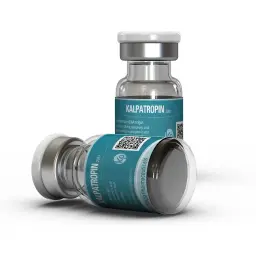
Growth Hormone Analog
Active Ingredient: Somatropin (r-hGH)
Concentration: 20 IU / vial
Price For: 1 kit [10 x Vials]
Brand: Kalpa Pharmaceuticals
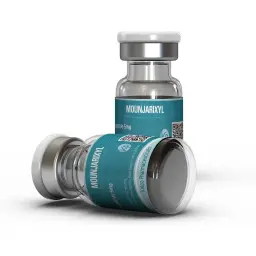
Human Peptide Hormone
Active Ingredient: Tirzepatide
Concentration: 5 mg / vial
Price For: 2 mL Vial
Brand: Kalpa Pharmaceuticals