Product Overview
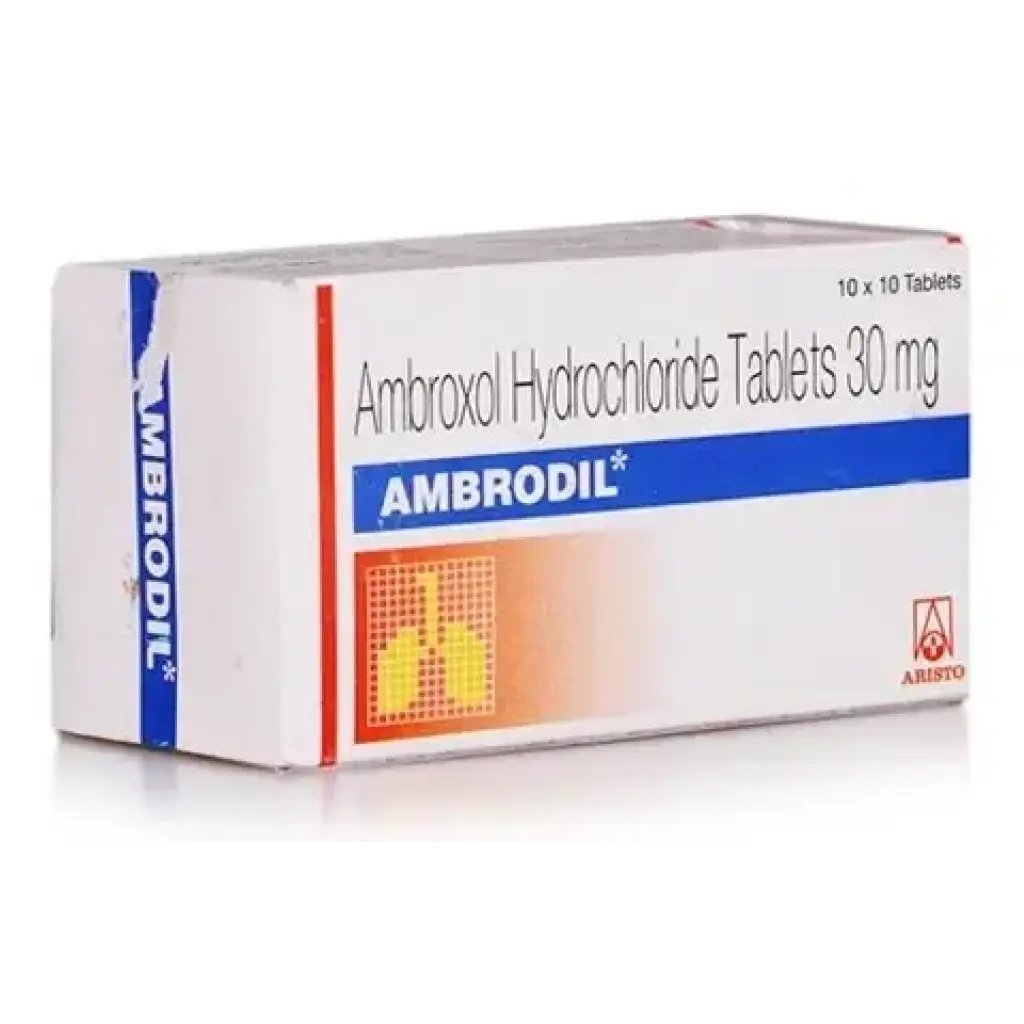
Ambrodil 30 mg is a mucolytic medication containing ambroxol hydrochloride, manufactured by Aristo Pharmaceuticals. It is supplied in tablet form with a strength of 30 mg per tablet, packaged in a pack of 50 tablets.
Ambroxol is widely used in respiratory medicine to improve mucus clearance and support airway function in both acute and chronic pulmonary conditions.
Drug Class
Ambrodil belongs to the mucolytic and expectorant class of medications. These agents reduce mucus viscosity and enhance mucociliary clearance, facilitating productive coughing.
Indications
Clinical Use
Ambroxol is indicated for respiratory conditions associated with excessive or thick mucus production, including:
- Acute and chronic bronchitis
- Chronic obstructive pulmonary disease (COPD)
- Asthma with mucus hypersecretion
- Bronchiectasis
Symptomatic Relief
It is commonly used to:
- Loosen and thin mucus in the airways
- Facilitate easier expectoration
- Reduce chest congestion
Mechanism of Action
Ambroxol acts by:
- Breaking down mucopolysaccharide fibers in mucus
- Stimulating surfactant production in the lungs
- Enhancing ciliary activity to promote mucus clearance
This results in less viscous mucus and improved respiratory function.
Dosage & Administration
- Adults: 30 mg taken 2–3 times daily
- Maintenance: May be reduced to twice daily after initial therapy
Tablets should be taken with adequate fluid intake to enhance mucolytic action.
Use in Females
Ambroxol is considered safe for use in females, including in general adult populations. However:
- Use during pregnancy should be guided by a healthcare provider
- Caution is advised during breastfeeding
Pre-Treatment Considerations
Before initiating Ambroxol therapy, assess:
- Underlying respiratory conditions
- History of gastric ulcers (ambroxol may increase gastric secretion)
- Allergy to ambroxol or related compounds
No routine laboratory testing is typically required.
Comparative Analysis
Ambroxol vs Bromhexine
- Ambroxol is an active metabolite of bromhexine
- More potent mucolytic effect
- Faster onset of action
Ambroxol vs Acetylcysteine
- Ambroxol enhances surfactant production
- Acetylcysteine directly breaks disulfide bonds in mucus
- Both improve mucus clearance via different mechanisms
Risk Management
Common Side Effects
- Gastrointestinal discomfort
- Nausea
- Dry mouth or throat
Rare Side Effects
- Allergic reactions (rash, urticaria)
- Severe skin reactions (very rare)
Renal & Hepatic Considerations
Ambroxol is generally safe, but caution is advised in severe renal or hepatic impairment. Dose adjustment may be necessary in advanced cases.
Drug Interactions
- Generally low interaction potential
- May enhance penetration of certain antibiotics into lung tissue
Sourcing & Selection
When selecting ambroxol products, consider:
- Reputable manufacturers such as Aristo Pharmaceuticals
- Consistent dosage and tablet quality
- Proper packaging and storage conditions
Conclusion
Ambrodil 30 mg (Ambroxol) is an effective mucolytic agent widely used in respiratory care. By improving mucus clearance and airway function, it plays a key role in managing productive cough and chronic respiratory conditions. Its favorable safety profile makes it suitable for a broad patient population when used appropriately.
Ambrodil 30 mg FAQ
What is Ambroxol 30mg used for?
Ambroxol 30 mg is used to treat respiratory conditions with thick mucus by thinning secretions and making it easier to cough them out.
How long does Ambroxol 30 mg take to work?
Ambroxol typically begins to work within 30–60 minutes, with noticeable improvement in mucus clearance within a few hours.
Does Ambroxol stop coughing?
Ambroxol does not suppress cough. Instead, it makes coughs more productive by loosening mucus, which helps clear the airways.
Is Ambroxol safe for kidneys?
Ambroxol is generally safe for kidney function in standard doses. However, caution is advised in patients with severe renal impairment, and medical supervision is recommended.