Product Overview
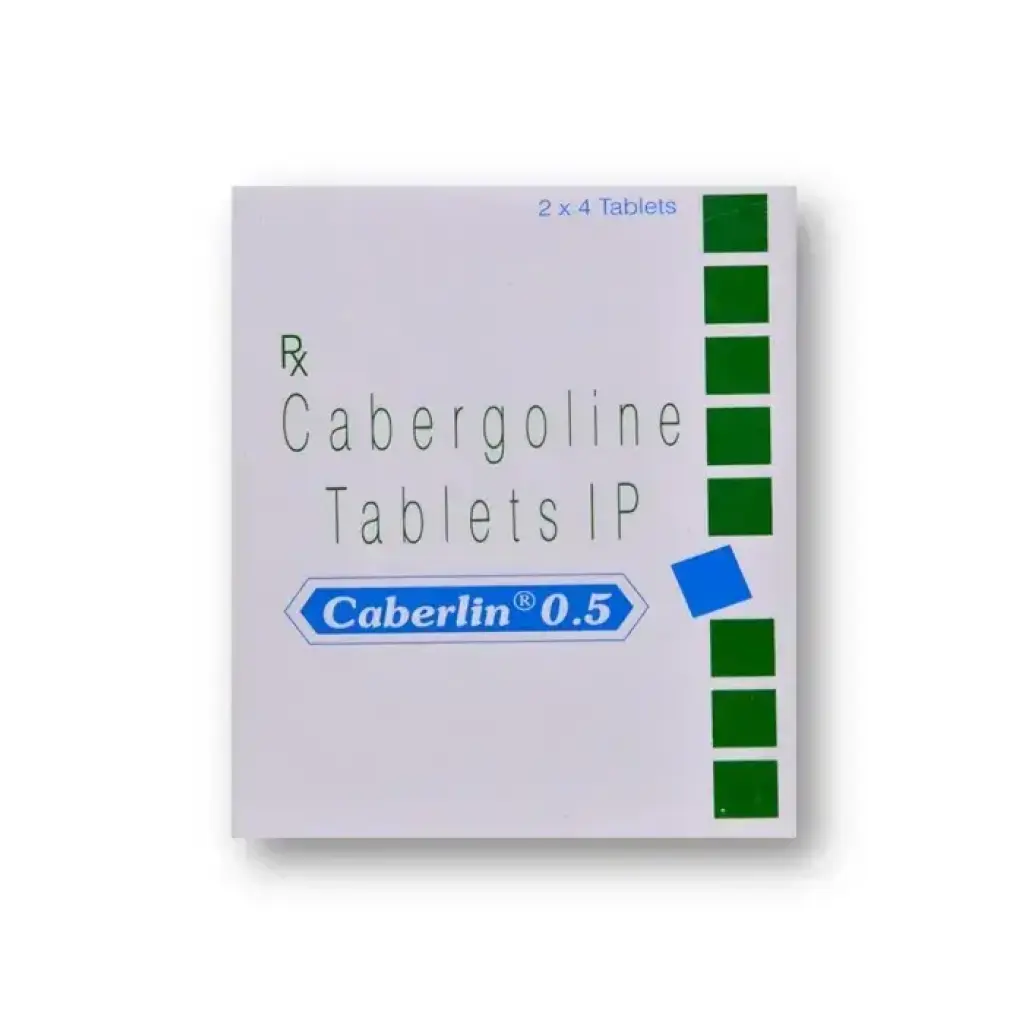
Caberlin contains cabergoline, a potent dopamine agonist used to manage elevated prolactin levels. Manufactured by Sun Pharma Laboratories and associated with the well-known brand Dostinex, it is available in 0.25 mg and 0.5 mg tablet strengths in packs of 8 tablets.
Cabergoline is widely prescribed in endocrinology and is also commonly used in hormone-related therapies to control prolactin secretion.
Drug Class
Caberlin belongs to the dopamine agonists, specifically acting as a D2 receptor agonist that suppresses prolactin release from the pituitary gland.
Indications
Clinical Use
- Hyperprolactinemia (high prolactin levels)
- Prolactin-secreting pituitary adenomas (prolactinomas)
- Menstrual disorders related to prolactin imbalance
- Infertility associated with elevated prolactin
Additional Uses
- Management of prolactin-related side effects during hormonal therapy
- Prevention of lactation when medically indicated
Mechanism of Action
Cabergoline stimulates dopamine D2 receptors in the pituitary gland, which inhibits prolactin secretion. This leads to:
- Reduction in circulating prolactin levels
- Restoration of normal hormonal balance
- Improvement in reproductive function
The long half-life of cabergoline allows for less frequent dosing compared to other dopamine agonists.
Dosage & Administration
- Initial dose: 0.25 mg twice weekly
- Titration: Adjust based on prolactin levels
- Typical range: 0.25–1 mg twice weekly
Cabergoline is often taken with food to reduce gastrointestinal side effects. Many patients prefer taking it at night to minimize dizziness or nausea.
HRT/TRT Relevance
Caberlin is frequently used alongside testosterone replacement therapy (TRT) or anabolic regimens to manage elevated prolactin levels, which may occur due to certain compounds.
Use in Females
Cabergoline is commonly prescribed in women for:
- Restoring ovulation
- Treating prolactin-related infertility
- Managing menstrual irregularities
It is generally well tolerated but should be used under medical supervision.
Pre-Treatment Assessment
- Serum prolactin levels
- Pituitary imaging (if indicated)
- Blood pressure monitoring
Regular follow-up is essential to adjust dosing and monitor response.
Comparative Analysis
Cabergoline vs Bromocriptine
- Longer half-life (less frequent dosing)
- Better tolerability
- More effective prolactin suppression
Cabergoline in Hormonal Therapy
- Preferred for prolactin control in TRT cycles
- Lower incidence of side effects compared to alternatives
Risk Management
Common Side Effects
- Nausea
- Dizziness
- Headache
- Fatigue
Serious Side Effects
- Low blood pressure (orthostatic hypotension)
- Cardiac valve issues (rare, with long-term high doses)
Patients should report persistent dizziness, chest pain, or breathing difficulty.
Mitigation Strategies
- Start with low doses
- Take at night to reduce side effects
- Monitor cardiovascular health in long-term use
Drug Interactions
- Dopamine antagonists: may reduce effectiveness
- Antihypertensives: additive blood pressure lowering
- Macrolide antibiotics: may increase drug levels
Sourcing & Selection
When choosing cabergoline products:
- Select trusted manufacturers like Sun Pharma
- Ensure proper storage and packaging
- Verify dosage strength for intended use
Conclusion
Caberlin (cabergoline) is an effective and well-tolerated dopamine agonist for managing elevated prolactin levels. Its long duration of action, convenient dosing schedule, and strong efficacy make it a preferred choice in both clinical endocrinology and hormone-related therapies.
Caberlin 0.25 mg, 0.5 mg FAQ
What is the use of Caberlin Tablet?
Caberlin is used to treat high prolactin levels, helping restore hormonal balance and improve reproductive health.
What is cabergoline used for?
Cabergoline is used for hyperprolactinemia, prolactinomas, infertility, and menstrual disorders linked to elevated prolactin.
How much weight will I lose on cabergoline?
Cabergoline is not intended for weight loss. Any weight changes are typically minor and related to hormonal normalization.
Why is cabergoline taken at night?
It is often taken at night to reduce the impact of side effects like dizziness and nausea.