Product Overview
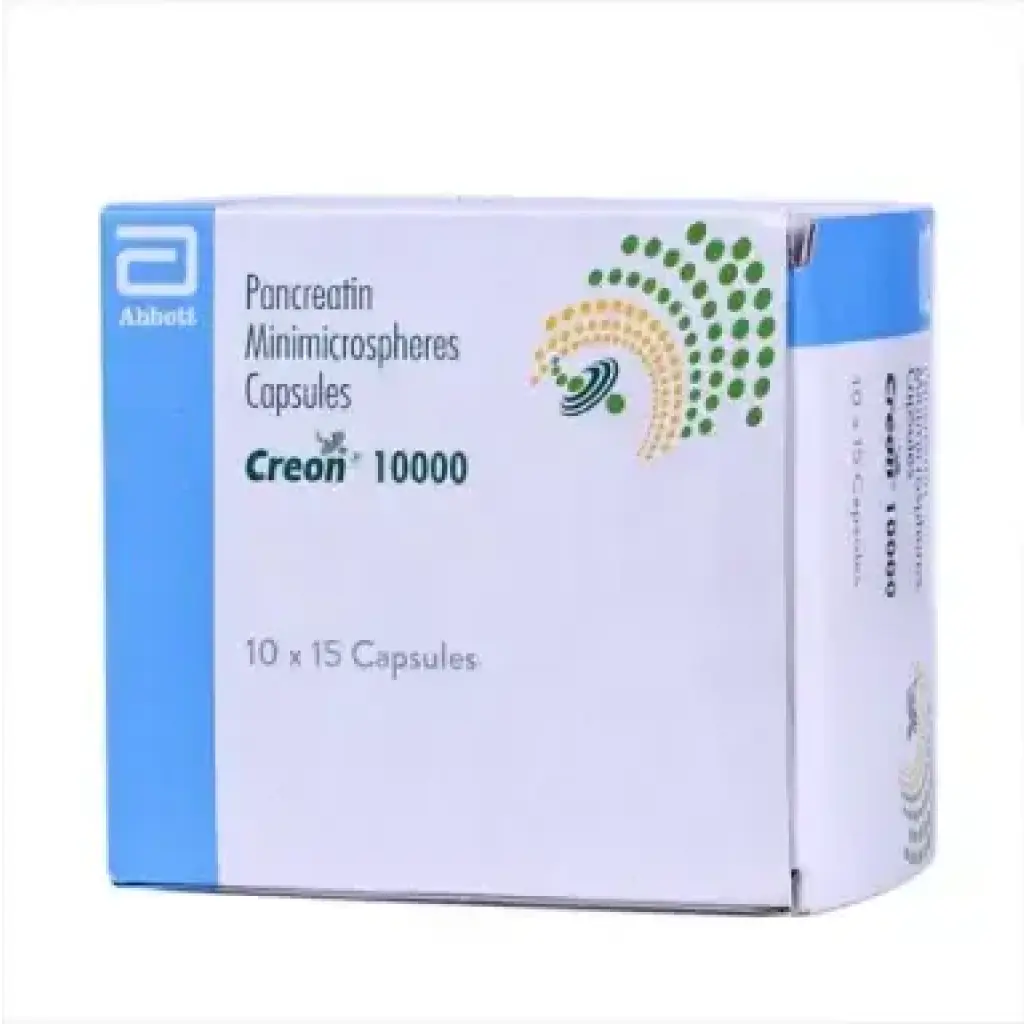
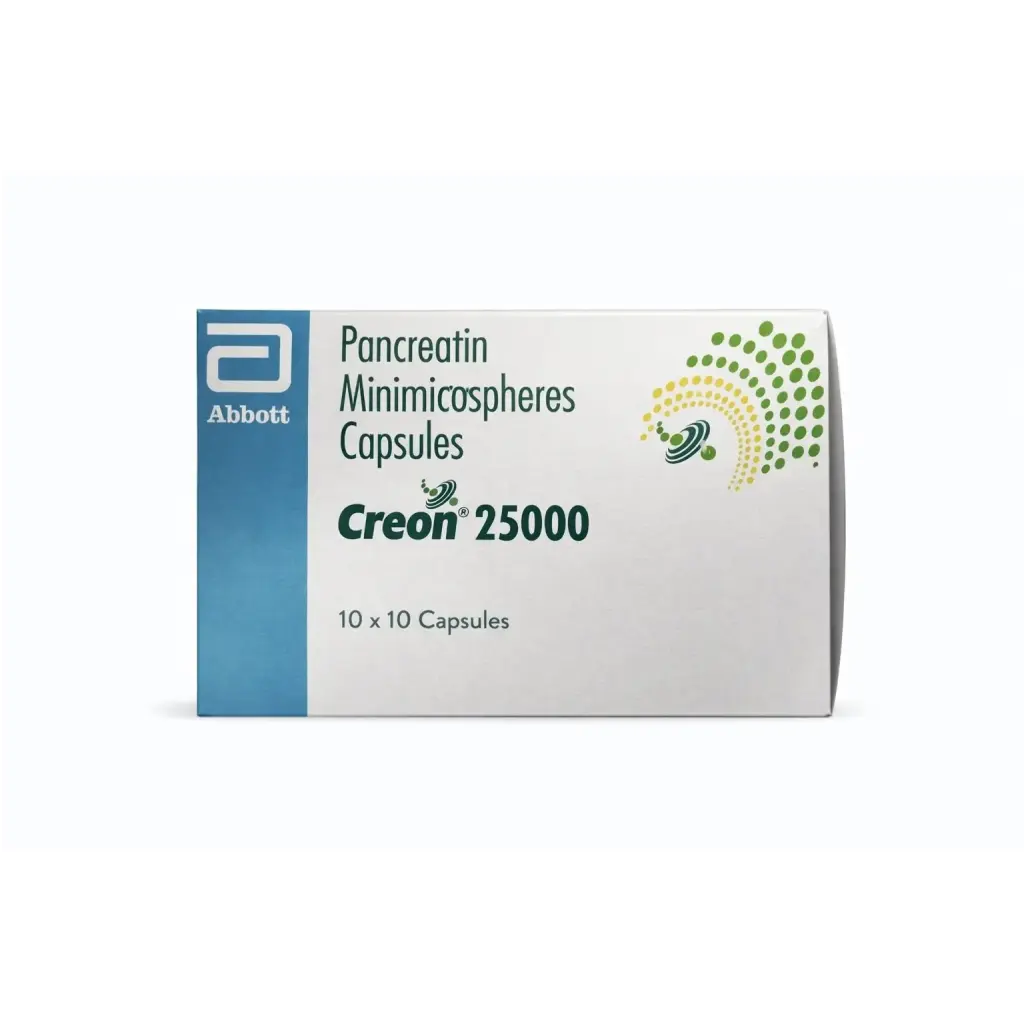
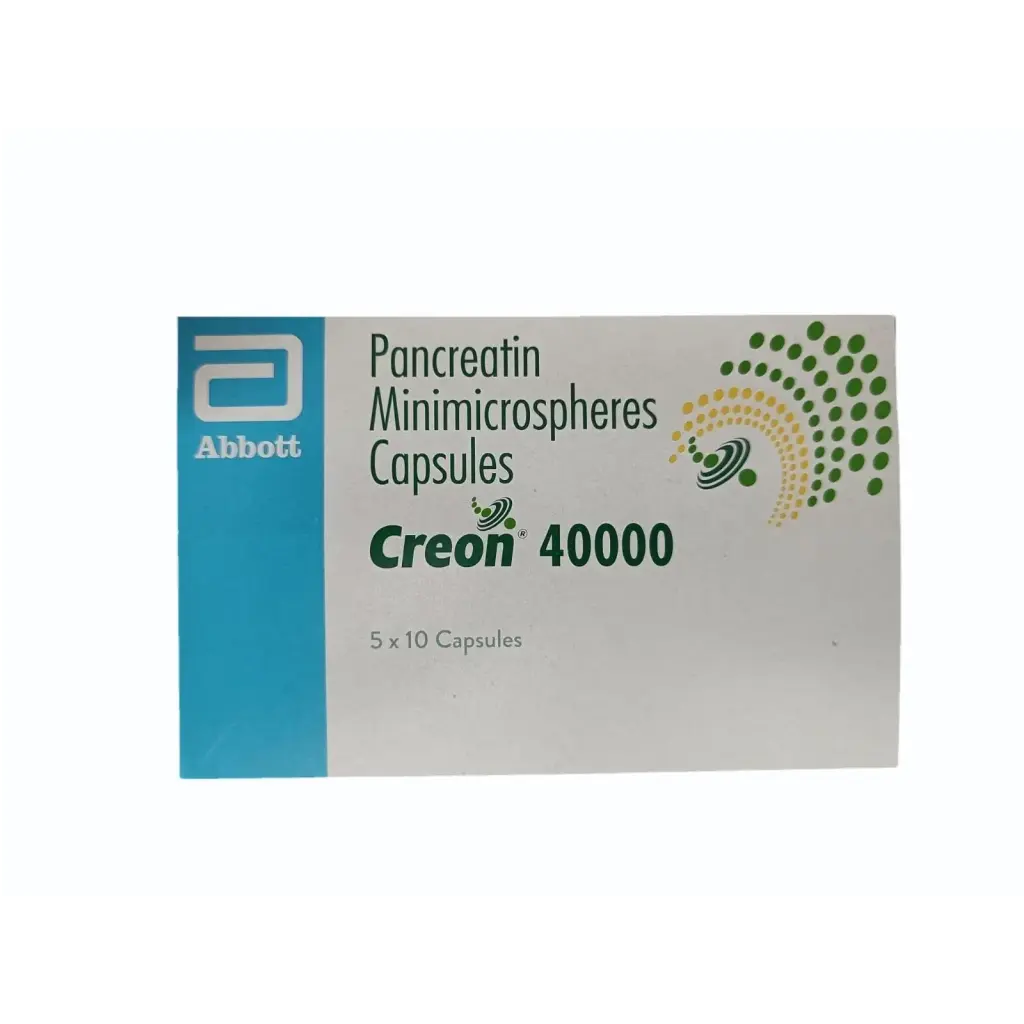
Creon is a pancreatic enzyme replacement therapy (PERT) containing pancreatin, a mixture of digestive enzymes including lipase, amylase, and protease. It is available in multiple strengths (150 mg, 300 mg, and 400 mg capsules) and is supplied in packs of 90 or 100 capsules.
Creon is designed to help individuals who cannot produce enough natural pancreatic enzymes to properly digest food.
Drug Class
Creon belongs to the digestive enzyme replacement therapy class, specifically pancreatic enzyme supplements.
Indications
Primary Uses
- Exocrine pancreatic insufficiency (EPI)
- Cystic fibrosis-related digestive issues
- Chronic pancreatitis
- Post-pancreatectomy (after pancreas surgery)
Symptoms Treated
- Fat malabsorption
- Bloating and gas
- Diarrhea or greasy stools (steatorrhea)
- Unintended weight loss
Mechanism of Action
Creon provides a combination of enzymes:
- Lipase: Breaks down fats
- Amylase: Breaks down carbohydrates
- Protease: Breaks down proteins
These enzymes assist digestion by replacing insufficient pancreatic enzyme production, improving nutrient absorption.
Dosage & Administration
- Dose: Individualized based on body weight, diet, and severity of enzyme deficiency
- Administration: Taken with meals and snacks
Capsules should be swallowed whole or opened and mixed with soft acidic food if needed (do not crush or chew the granules).
Can You Stop Taking Creon?
Creon is usually a long-term or lifelong therapy for conditions like pancreatic insufficiency. Stopping it may lead to a return of digestive symptoms unless pancreatic function improves.
Why Is CREON Hard to Get?
Availability issues may occur due to:
- High global demand
- Manufacturing limitations
- Regulatory or supply chain disruptions
Is CREON a High-Risk Medication?
Creon is generally considered safe when used as prescribed. However, high doses over prolonged periods may increase the risk of certain side effects.
Pre-Treatment Assessment
- Diagnosis of pancreatic insufficiency
- Nutritional assessment
- Evaluation of digestive symptoms
Comparative Analysis
Creon vs Other Pancreatin Products
- High-quality formulation with consistent enzyme activity
- Enteric-coated microspheres for targeted release
- Widely studied and clinically trusted
Creon vs Over-the-Counter Enzymes
- Prescription strength and regulated dosing
- Higher efficacy for severe enzyme deficiency
- More reliable absorption
Risk Management
Common Side Effects
- Abdominal discomfort
- Nausea
- Constipation or diarrhea
Serious Side Effects
- Fibrosing colonopathy (rare, high doses)
- Allergic reactions
Mitigation Strategies
- Use the lowest effective dose
- Take with meals
- Regular monitoring in long-term use
What to Avoid While Taking Creon
- Avoid crushing or chewing capsules
- Avoid taking without food
- Avoid excessive dosing
Drug Interactions
- Minimal systemic interactions due to local action in the gut
- Caution with other digestive enzyme products
Sourcing & Selection
When selecting Creon products, consider:
- Correct enzyme strength
- Trusted manufacturers like Abbott
- Proper storage conditions
Conclusion
Creon is an essential digestive enzyme replacement therapy for individuals with pancreatic insufficiency. Its proven efficacy, flexible dosing, and targeted delivery system make it a cornerstone treatment for improving digestion and nutrient absorption.
Creon 150 mg, 300 mg, 400 mg FAQ
Why is CREON so hard to get?
Supply issues may arise due to high demand, manufacturing limitations, or distribution challenges.
Is CREON a high risk medication?
No, it is generally safe when used as directed, though high doses may carry risks.
Can you ever stop taking CREON?
Most patients require long-term use unless pancreatic function improves significantly.
What to avoid while taking Creon?
Avoid taking it without food, crushing capsules, or exceeding prescribed doses.