Product Overview
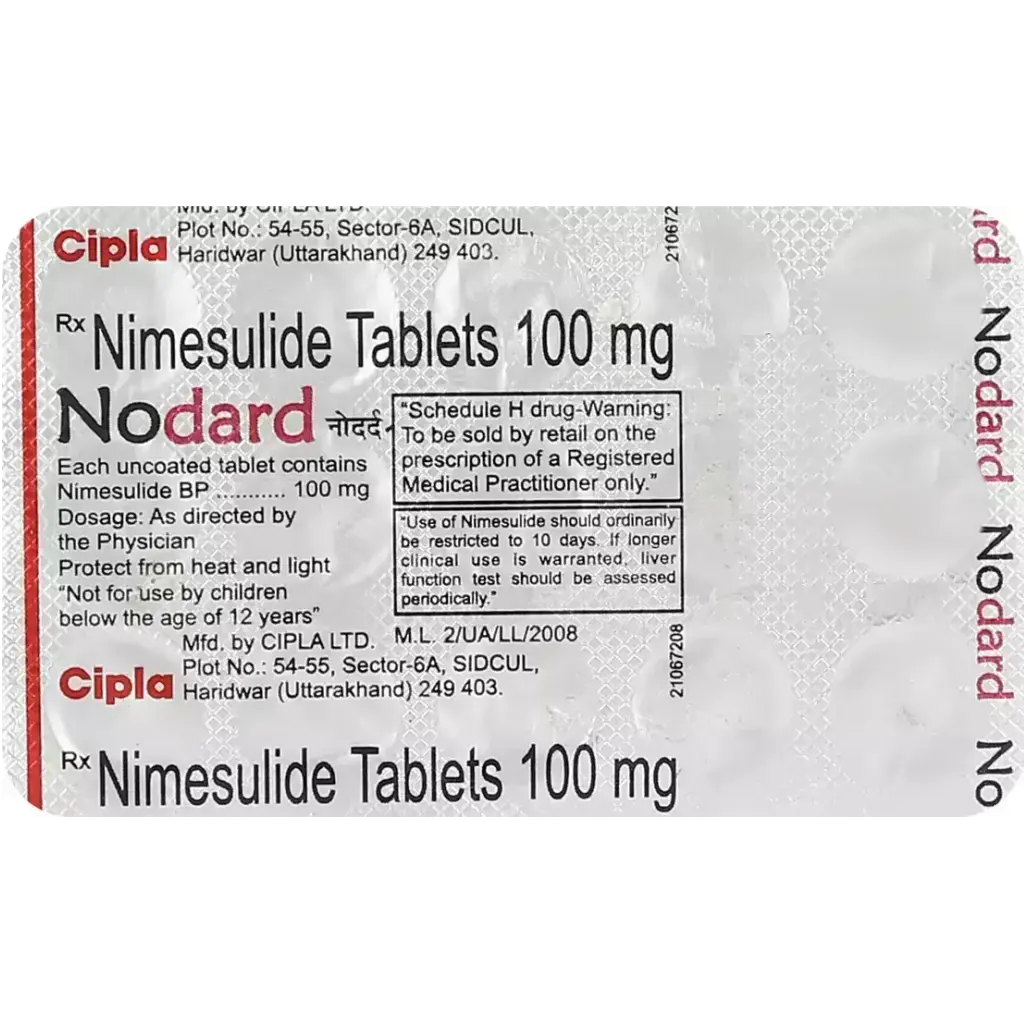
Nodard 100 mg contains nimesulide, a non-steroidal anti-inflammatory drug (NSAID) used to relieve pain, inflammation, and fever. It is commonly prescribed for short-term treatment of acute painful conditions.
Nodard provides fast and effective relief from various types of pain, including musculoskeletal pain and inflammatory conditions.
Drug Class
Nodard belongs to the NSAIDs, specifically a selective COX-2 inhibitor with analgesic and anti-inflammatory properties.
Indications
Primary Uses
- Acute pain (e.g., injury, dental pain)
- Inflammatory conditions
- Fever management
Secondary Uses
- Muscle and joint pain
- Menstrual pain (dysmenorrhea)
- Post-operative pain relief
Mechanism of Action
Nimesulide works by inhibiting cyclooxygenase-2 (COX-2):
- Reduces production of prostaglandins
- Decreases inflammation and pain signals
- Lowers fever
This targeted action provides effective relief with potentially fewer gastrointestinal effects compared to non-selective NSAIDs.
Dosage & Administration
- Typical dose: 100 mg twice daily
It should be taken after meals to minimize stomach irritation.
How Does Nodard Affect the Body?
Nodard reduces inflammation and pain by blocking prostaglandin synthesis. This leads to:
- Reduced swelling and inflammation
- Relief from pain and discomfort
- Lowered body temperature in fever
Because of potential liver risks, it is usually recommended for short-term use only.
HRT/TRT Relevance
Nodard may be used to manage pain or inflammation in patients undergoing various therapies, but long-term use should be avoided.
Use in Females
Nodard may be used in females for pain relief, including menstrual pain. It should be avoided during pregnancy unless prescribed.
Pre-Treatment Assessment
- Liver function evaluation
- History of gastrointestinal disorders
- Assessment of other medications
Effectiveness
Nodard is highly effective for short-term pain and inflammation relief, particularly in acute conditions.
Risk Management
Common Side Effects
- Nausea
- Stomach pain
- Heartburn
Less Common Effects
Serious Side Effects
- Liver damage
- Gastrointestinal bleeding
- Severe hypersensitivity reactions
Mitigation Strategies
- Use for the shortest duration possible
- Avoid alcohol consumption
- Monitor liver function if needed
What to Avoid While Taking Nodard
- Alcohol (increases liver risk)
- Long-term use without supervision
- Combining with other NSAIDs
Drug Interactions
- Other NSAIDs
- Anticoagulants
- Certain liver-metabolized drugs
Sourcing & Selection
When selecting Nodard:
- Verify correct dosage (100 mg)
- Ensure Cipla authenticity
- Store properly in a dry place
Conclusion
Nodard 100 mg is a fast-acting NSAID that provides effective relief from pain and inflammation. Due to its potential liver-related risks, it is best used for short-term treatment under medical guidance.
Nodard 100 mg FAQ
How long does Nodard take to work?
It typically works within 30–60 minutes.
How does nodard affect the body?
It reduces pain, inflammation, and fever by inhibiting prostaglandins.
What are serious side effects?
Serious risks include liver toxicity, gastrointestinal bleeding, and allergic reactions.